


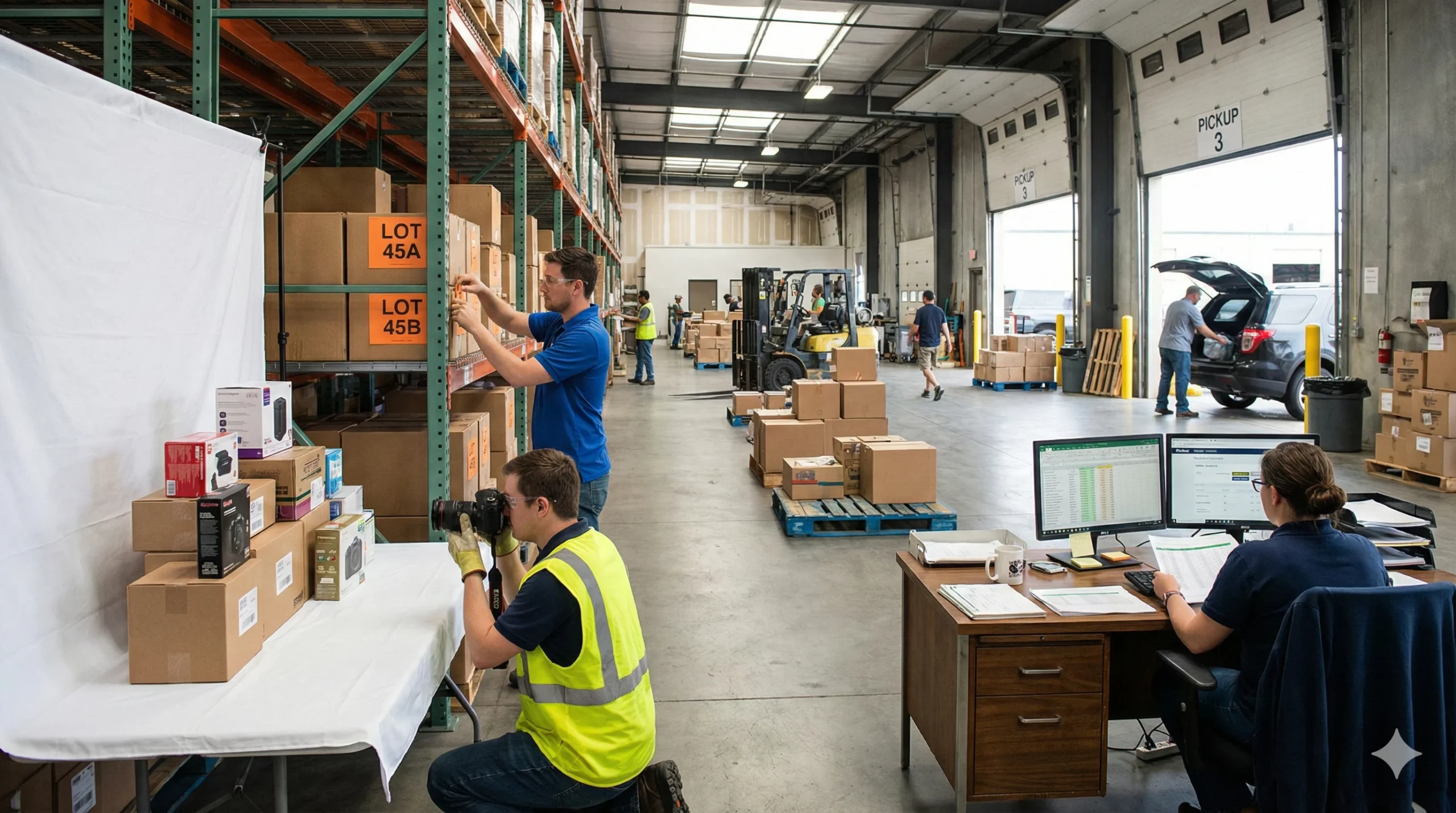
A closed shop leaves more than an empty unit. Behind the shutters may be unopened cartons, display fixtures, seasonal merchandise and products that still have willing buyers. For people able to assess, collect and resell goods, the end of one trading operation can mark the start of another. The opportunity, however, sits in the details rather than the simple fact of a closure.
Why usable stock remains
Retailers close for many reasons, including weak footfall, rising operating costs and changes in ownership. Those pressures say little about the usefulness of every item on the shelves. Some goods may be current and boxed; others may be older colours, incomplete sets or lines that have lost their original retail audience. Buyers need to separate business distress from product quality, instead of assuming one explains the other.
Liquidation auctions can bring varied goods into one sale process, but catalogues differ in how much they reveal. A lot described by category is not the same as a checked inventory. Photographs, condition reports and collection terms help establish what is actually being offered.
The real calculation
Imagine a reseller bidding on shop fittings alongside boxed home accessories. The accessories might sell individually online, while the fittings appeal mainly to local businesses. Those are separate markets with different delivery costs, waiting times and return risks. Adding their original ticket prices together would produce a misleading estimate of what the lot is worth today.
Instead, a buyer can begin with conservative achievable selling prices, then subtract marketplace fees, packing materials, transport, storage, testing and likely unsold items. A bid ceiling should also leave room for time spent sorting and listing. If the figures only work when every item achieves an ideal price, there may be no genuine margin.
Who can make use of it?
Independent market traders may be able to sell everyday household goods quickly. Online specialists might find niche accessories with little local appeal. Community organisations can sometimes reuse furniture or equipment, provided its condition and suitability are established. Each outlet values different things, so an experienced buyer often starts with their customers rather than the apparent discount.
Physical logistics deserve the same attention. Closing premises may require collection within a narrow window, with little help loading. A mixed lot can include heavy items, damaged packaging and products that cannot lawfully or safely be resold without further checks. Anyone without a vehicle, storage or a practical disposal plan risks turning a cheap purchase into an expensive problem.
Opportunity without illusion
Successful liquidation auctions are not simply contests to win the largest volume at the lowest hammer price. The stronger approach is selective: inspect information, ask what is missing, allow for fees and decide where each usable item will go. A disciplined bidder also knows when to walk away, even if the goods once occupied attractive high street displays.
Some liquidation auctions include goods that appear identical but have very different destinations. A seller of spare household accessories may welcome matching sets, while an operator specialising in shop furniture might be interested only in shelving. Before bidding, sorting these possible outcomes into separate groups helps stop an attractive headline value from hiding difficult-to-sell stock.
Before another round of liquidation auctions, a short viewing visit can answer questions that pictures cannot. Check whether product codes match the advertised ranges, whether cartons contain mixed sizes and whether collection access is realistic. Experienced traders often use this information to reject purchases that do not suit their sales channel.
As town centres change, stock will continue to move between owners and selling channels. The most useful question for a potential buyer is not how much a retailer previously charged, but which customers still want the goods, in what condition and at what realistic price. That answer turns a closed storefront into a business decision rather than a gamble.


