


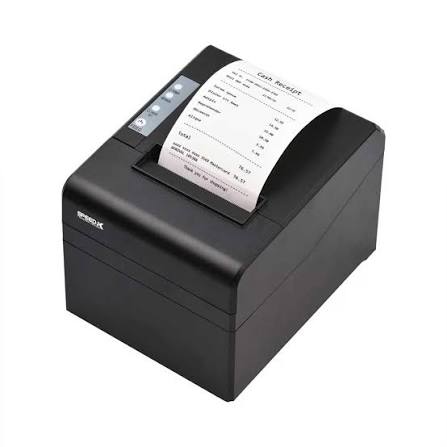
Printing technology plays an important role in businesses that handle daily transactions, process customer orders, and maintain payment records. Retail stores, restaurants, supermarkets, and other commercial environments require reliable printing equipment to produce receipts quickly and accurately. Among the commonly used technologies, thermal receipt printers and traditional impact printers remain two important options.
Although both devices serve the purpose of producing printed information, their operating mechanisms, printing speeds, maintenance requirements, and applications differ considerably. A Thermal Receipt Printer uses controlled heat to create images on specially coated paper, while an impact printer produces characters by physically striking an ink ribbon against paper. Understanding these differences can help businesses select equipment that suits their operational requirements and budget.
What Is a Thermal Receipt Printer?
A thermal receipt printer is an electronic printing device that uses heat-sensitive paper to produce text, numbers, barcodes, and graphics. It does not require conventional ink cartridges, toner, or ribbons when operating in direct thermal mode.
The printer contains a thermal printhead with multiple small heating elements. As paper moves through the printing mechanism, selected elements heat specific areas of its surface. The paper’s chemical coating reacts to this heat and changes color, creating the required printed information.
Thermal receipt printers are widely used in:
- Retail stores and supermarkets.
- Restaurants and cafes.
- Banking and financial institutions.
- Parking facilities and ticket counters.
- Healthcare reception areas.
- Self-service kiosks.
Their compact construction, relatively quiet operation, and fast printing capabilities make them suitable for businesses that process frequent transactions.
What Is a Traditional Impact Printer?
A traditional impact printer creates printed characters through physical contact between a printhead, an ink ribbon, and paper. Instead of using heat-sensitive paper, it relies on mechanical force to transfer ink onto the printing surface.
Dot matrix printers are among the most common examples of impact printing technology. They use small pins that strike an ink ribbon in specific patterns to form letters, numbers, and graphics.
Impact printers are particularly useful when businesses need to produce multiple copies of a document simultaneously. Their ability to print on multipart forms makes them valuable in certain commercial and industrial applications.
Common uses include:
- Multi-copy invoices and receipts.
- Warehouse documentation.
- Delivery records.
- Industrial transaction reports.
- Forms requiring duplicate or triplicate copies.
Although impact printers are generally slower and noisier than thermal receipt printers, they remain useful in environments where physical pressure-based printing provides specific advantages.
How Do Thermal and Impact Printers Work?
The main difference between these technologies lies in how they transfer information onto paper.
Thermal Printing Process
Thermal printing follows a relatively simple process:
- The POS system sends transaction information to the printer.
- The printer’s control board processes the incoming data.
- The paper-feeding mechanism moves thermal paper across the printhead.
- Heating elements activate selected areas of the paper.
- The heat-sensitive coating changes color to form text and graphics.
- The completed receipt is presented to the user.
Since direct thermal printing does not involve striking mechanisms or ink ribbons, it generally produces less noise and requires fewer consumable components.
Impact Printing Process
Impact printing uses a mechanical printing process.
- The computer or POS system sends printing instructions.
- The printer processes the information.
- The printhead positions its pins according to the required characters.
- The pins strike an ink ribbon against the paper.
- Ink transfers onto the paper to create the printed content.
- The paper advances until the document is complete.
This physical printing process allows impact printers to work with certain multipart forms that thermal printers cannot reproduce directly.
Thermal Receipt Printer vs. Traditional Impact Printer: Main Differences
Both technologies have practical applications, but their characteristics make them suitable for different business environments.
| Comparison Factor | Thermal Receipt Printer | Traditional Impact Printer |
|---|---|---|
| Printing method | Heat-sensitive printing | Mechanical striking |
| Printing material | Thermal paper | Standard paper and ink ribbon |
| Ink or ribbon | Not required for direct thermal | Required |
| Printing speed | Generally faster for receipts | Generally slower |
| Noise level | Relatively quiet | Noticeably louder |
| Print quality | Clear text and graphics | Depends on printhead and ribbon |
| Maintenance | Generally simpler | More mechanical maintenance |
| Paper compatibility | Requires compatible thermal paper | Supports various paper types |
| Multiple copies | Not directly supported by direct thermal printing | Supports multipart forms |
| Common applications | Retail receipts and tickets | Invoices and duplicate documents |
1. Printing Speed and Efficiency
Printing speed is an important consideration for businesses that handle frequent transactions.
Thermal receipt printers are generally faster than traditional impact printers when producing standard receipts. Their printing process does not depend on mechanical pins repeatedly striking an ink ribbon.
This makes thermal technology particularly useful in supermarkets, convenience stores, and restaurants where customers expect quick service.
Impact printers typically operate at lower speeds because their printheads must physically strike the ribbon and paper to form characters. However, their performance may still be sufficient for businesses with moderate document-printing requirements.
For high-volume checkout operations, thermal printing is usually the more practical option.
2. Print Quality and Readability
Print quality affects how easily customers and employees can read transaction details.
Thermal printers generally produce sharp text, consistent characters, and clear barcodes when used with suitable thermal paper. Their printing mechanism is well suited to receipts containing product descriptions, prices, payment information, and business logos.
Impact printers can produce readable documents, but their output may appear less uniform because printing depends on the mechanical condition of the printhead and ink ribbon.
For businesses that prioritize clean-looking customer receipts, thermal printing often offers an advantage. However, impact printing remains suitable for many internal documents where basic readability is sufficient.
3. Noise Levels During Operation
Noise is another noticeable difference between these technologies.
Thermal receipt printers operate relatively quietly because they use heating elements rather than mechanical striking pins. This makes them appropriate for customer-facing environments such as retail counters, hotels, clinics, and restaurants.
Impact printers produce more noise because their printheads repeatedly strike the ink ribbon and paper. The sound may become noticeable during continuous printing.
In environments where employees and customers work close to printing equipment, quieter thermal printers can contribute to a more comfortable atmosphere.
4. Maintenance and Operating Requirements
Maintenance requirements influence the long-term convenience of printing equipment.
Direct thermal printers generally have fewer consumable components because they do not require conventional ink or ribbons. Their routine maintenance usually involves cleaning the printhead, inspecting the platen roller, checking the paper-feeding mechanism, and maintaining the cutter when fitted.
Impact printers require additional attention because their ink ribbons gradually wear out and need replacement. Mechanical pins, printhead assemblies, and other moving components may also require inspection or servicing.
Although both technologies need proper maintenance, thermal printers are generally easier to manage in everyday receipt-printing environments.
5. Printing Materials and Paper Compatibility
The two technologies use different types of printing materials.
Thermal receipt printers require specially coated paper that reacts to heat. The paper must meet the printer’s supported width, roll diameter, and thickness specifications.
Impact printers can work with standard paper and certain multipart forms. This provides greater flexibility for businesses that need to produce duplicate or triplicate documents.
One limitation of direct thermal paper is its sensitivity to environmental conditions. Excessive heat, sunlight, friction, and unsuitable storage conditions can cause printed information to fade.
Impact printing may therefore be preferable when businesses need physical copies on conventional paper or documents designed for longer-term storage.
6. Cost of Ownership
The purchase price alone does not provide a complete picture of printing expenses. Businesses should consider consumables, maintenance, replacement components, and energy requirements.
Thermal printers eliminate the need for ink cartridges and ribbons in direct thermal applications. However, they require compatible thermal paper, which contributes to ongoing operating costs.
Impact printers require regular ink ribbon replacement and may involve additional mechanical servicing. Their operating expenses depend on printing frequency, ribbon consumption, and equipment condition.
A practical cost comparison should consider:
- Initial equipment investment.
- Paper and ribbon expenses.
- Routine maintenance.
- Replacement parts.
- Expected printing volume.
- Equipment lifespan.
For businesses printing large numbers of ordinary receipts, thermal technology can offer a convenient operating model. For organizations that rely on multipart documents, the additional consumable requirements of impact printing may be justified.
7. Durability of Printed Documents
The durability of printed information is an important factor when selecting a printing technology.
Direct thermal receipts are sensitive to heat, ultraviolet light, friction, and certain chemicals. Their appearance may deteriorate over time, depending on paper quality and storage conditions.
Impact-printed documents use ink transferred from a ribbon onto conventional paper. Their durability depends on the paper, ribbon quality, and storage environment.
For records that must be preserved for extended periods, businesses should evaluate document retention requirements carefully. Digital backups can also provide additional protection against the loss of important transaction information.
8. Design and Space Requirements
Thermal receipt printers are commonly designed with compact housings that fit easily on checkout counters. Their relatively simple internal mechanisms allow manufacturers to develop lightweight models suitable for fixed and mobile POS environments.
Traditional impact printers may require more internal mechanical components, which can influence their dimensions and weight.
For businesses with limited counter space, thermal printers can provide a more convenient installation arrangement.
However, the appropriate choice depends on the printer’s intended application and the available workspace.
9. Environmental Considerations
Both technologies have environmental considerations related to paper consumption, energy use, and replacement components.
Direct thermal printing eliminates ink cartridges and ribbons, reducing the number of consumable materials required. However, thermal paper contains specialized coatings, and its recycling options may differ from those of conventional paper.
Impact printers use ribbons that eventually require replacement. Some multipart forms also contain multiple paper layers, which can complicate disposal and recycling.
Businesses seeking to improve sustainability should evaluate paper sourcing, waste management practices, equipment energy consumption, and supplier specifications rather than assuming that one printing technology is automatically more environmentally friendly.
Which Printer Is Better for Different Business Applications?
The right choice depends on the type of documents a business needs to produce and how frequently printing occurs.
Retail Stores and Supermarkets
Thermal receipt printers are generally better suited to retail checkout counters. Their speed, compact size, and quiet operation support frequent customer transactions.
They can also integrate with modern POS systems to produce receipts containing product information, barcodes, and payment details.
Restaurants and Cafes
Thermal printers are widely used in restaurants for customer receipts and kitchen order tickets. Their fast output can help employees manage orders during busy service periods.
Some restaurants may still use impact printers for specific kitchen environments where multipart printing or particular paper requirements are important.
Warehouses and Logistics Businesses
Impact printers can be useful when warehouses need duplicate invoices, delivery documentation, or multipart transaction records.
However, businesses that primarily print labels and shipping information may find thermal printing technology more suitable.
Banks and Financial Institutions
Both technologies can serve different purposes in financial environments. Thermal printers are appropriate for transaction slips and customer receipts, while impact printers may be useful for specialized forms requiring multiple physical copies.
Small Businesses
Small businesses should evaluate their printing volume, available workspace, and operating budget.
For ordinary receipts, a compact thermal printer is generally a convenient choice. Businesses that frequently prepare duplicate paperwork may benefit from impact printing.
Advantages and Limitations of Each Technology
Understanding the strengths and weaknesses of both technologies makes purchasing decisions easier.
Advantages of Thermal Receipt Printers
- Fast receipt production.
- Quiet operation.
- No ink cartridges or ribbons required in direct thermal mode.
- Compact and lightweight designs.
- Relatively simple maintenance.
- Convenient integration with modern POS systems.
Limitations of Thermal Receipt Printers
- Require specially coated thermal paper.
- Printed information can fade under certain conditions.
- Direct thermal printing does not produce multiple copies simultaneously.
- Paper compatibility must match printer specifications.
Advantages of Traditional Impact Printers
- Support for multipart forms.
- Ability to print on conventional paper.
- Suitable for certain specialized business documents.
- Useful in environments where duplicate physical records are required.
Limitations of Traditional Impact Printers
- Generally slower receipt production.
- Higher operating noise.
- Regular ink ribbon replacement.
- More mechanical components.
- Potentially greater maintenance requirements.
Factors to Consider Before Replacing an Impact Printer With a Thermal Model
Businesses considering a transition should first evaluate their existing printing requirements.
A thermal printer may improve checkout efficiency, but it may not replace every function of an impact printer.
Before making the change, consider the following factors:
- Document requirements: Determine whether the business needs ordinary receipts or multiple physical copies.
- Paper specifications: Check whether thermal paper is appropriate for the intended documents.
- Software compatibility: Confirm that the new printer supports the existing POS system and operating environment.
- Printing volume: Select a model designed to handle the expected daily workload.
- Storage requirements: Consider whether receipts must remain readable for extended periods.
- Installation costs: Account for new hardware, software configuration, and employee training.
A gradual transition may be appropriate for businesses that use different printing technologies across several departments.
Future Developments in Receipt Printing Technology
Printing technology continues to evolve as businesses adopt cloud-based POS platforms, mobile payment systems, and automated retail solutions.
Thermal receipt printers are benefiting from improvements in wireless connectivity, compact designs, printing efficiency, and hardware durability.
At the same time, digital receipts are becoming more common. Retailers increasingly provide electronic transaction records through email, text messages, and mobile applications.
Despite these developments, physical receipts remain useful for customers who prefer printed records and businesses that require paper-based documentation.
Future printing solutions are likely to combine traditional receipt printing with more flexible digital transaction systems.
Conclusion
Thermal receipt printers and traditional impact printers serve different business requirements. Thermal technology offers fast printing, quiet operation, compact designs, and relatively simple maintenance, making it particularly suitable for modern retail and hospitality environments.
Impact printers remain valuable for specialized applications that require conventional paper or multiple copies of a document. Neither technology is universally suitable for every business.
By comparing printing speed, output quality, paper compatibility, maintenance, operating costs, and document requirements, businesses can identify the most appropriate solution for their operations. The best choice is ultimately the one that meets practical printing needs while supporting reliable and efficient daily workflows.


