


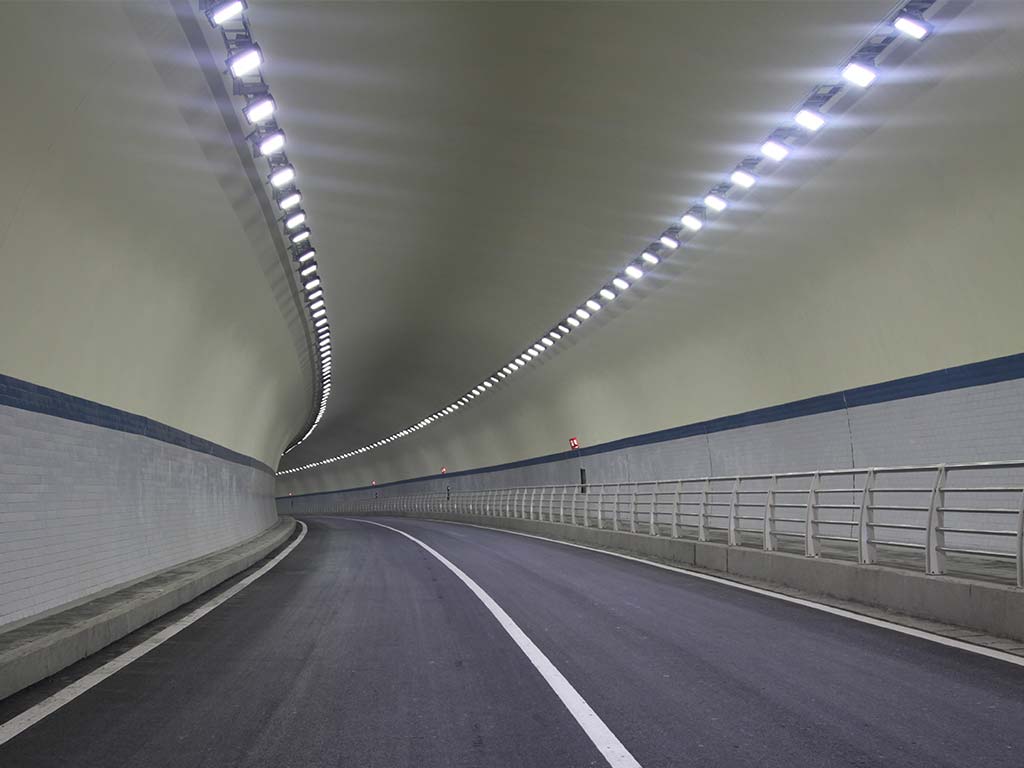
Choosing a manufacturing partner for tunnel lighting involves more than comparing product prices. Tunnel projects can require specific optical performance, environmental protection, electrical characteristics, documentation, and long-term product availability.
Before entering a supply relationship, buyers should understand how an LED Tunnel Lighting Manufacturer approaches product development, quality control, customization, testing, and customer support. Asking the right questions early can make it easier to determine whether a manufacturer’s capabilities match the project’s technical and commercial requirements.
1. What Tunnel Lighting Products Do You Manufacture?
Start by understanding the manufacturer’s actual product range.
Ask whether the company produces tunnel-specific fixtures and whether its products are designed for different applications such as entrance zones, transition areas, interior sections, or other tunnel environments.
A broad product range can also indicate whether the manufacturer can provide different power levels, optical distributions, mounting configurations, and control options.
2. What Environmental Conditions Are the Fixtures Designed For?
Tunnel lights may be exposed to moisture, dust, exhaust particles, vibration, and temperature changes.
Ask what environmental conditions the fixtures have been designed and tested for. This can help determine whether the product is appropriate for the specific installation rather than simply being a general-purpose outdoor light.
3. What IP Rating Does the Fixture Have?
Ingress protection is particularly relevant in tunnel applications.
Ask for the complete fixture’s IP classification and supporting test information. It is also useful to clarify how cable entries, connectors, seals, and access points are incorporated into the protection design.
4. How Is Thermal Performance Managed?
Tunnel lights can operate for extended periods, making heat management an important design consideration.
Ask about the heat sink, housing material, LED operating temperature, driver placement, and thermal testing procedures. Understanding these factors provides more information than simply looking at the fixture’s rated wattage.
5. Which LED and Driver Components Are Used?
The quality and compatibility of LEDs and drivers can influence fixture performance.
Useful questions include:
- Which LED package or brand is used?
- What driver options are available?
- What input voltage ranges are supported?
- Is dimming available?
- What protection features are incorporated?
- How are replacement components handled?
The answers can help clarify the technical configuration of the product.
6. What Optical Options Are Available?
Tunnel lighting often requires specific light distributions rather than a single universal beam pattern.
Ask whether the manufacturer provides different lenses, beam angles, or optical configurations. Requesting photometric files can also help lighting designers evaluate the fixture through simulation.
7. Can the Fixture Be Customized?
Some projects require changes to mounting arrangements, power ratings, optics, housing dimensions, cable connections, or control interfaces.
If customization is important, ask which modifications are available, whether engineering support is provided, and whether customized versions require minimum order quantities.
8. What Testing Is Performed Before Shipment?
A manufacturer’s testing procedures can provide useful information about production quality.
Ask whether finished fixtures undergo electrical, optical, thermal, environmental, or functional testing. It is also worth asking which tests are performed on every fixture and which are conducted through sampling.
9. Can You Provide Test Reports and Technical Documents?
Technical documentation is important when equipment needs to be reviewed by engineers, contractors, consultants, or regulatory authorities.
Depending on the product and project, relevant documentation may include datasheets, photometric files, electrical specifications, test reports, installation instructions, and certification information.
10. Which Standards and Certifications Does the Product Meet?
Requirements can vary according to the destination market and project specifications.
Ask which standards the fixture has been tested or certified against and whether the documentation applies to the exact product configuration being offered.
This distinction can be important when customized versions differ from standard models.
11. What Is the Expected Production Capacity?
For large tunnel projects, supply capacity can be just as important as product specifications.
Ask about monthly production capacity, current manufacturing schedules, component availability, and the manufacturer’s ability to handle large or recurring orders.
12. What Are the Typical Lead Times?
Lead times can affect installation schedules and project planning.
Clarify expected production time for standard products and whether customized products require additional development or preparation time.
It is also useful to understand how lead times may change for repeat orders.
13. Are OEM or Private Label Services Available?
Businesses purchasing tunnel lighting under their own brand may require customized labeling, packaging, documentation, or product specifications.
Ask whether OEM and private label services are available and what minimum quantities, tooling requirements, and development procedures apply.
14. How Is Quality Controlled During Production?
Quality control should cover more than final visual inspection.
Ask about incoming component checks, assembly procedures, electrical testing, optical testing, environmental testing, production records, and final inspection.
Understanding the quality-control process can provide insight into how consistently products are manufactured.
15. How Are Product Changes Managed?
Components and manufacturing processes can change over time. A driver, LED package, connector, or other component may eventually be replaced by an alternative.
Ask how customers are informed about significant product changes and whether revised components are tested to maintain the original performance requirements.
16. What Warranty Is Provided?
Warranty terms should be clearly understood before a large order is placed.
Ask about warranty duration, covered failures, exclusions, claim procedures, required documentation, and how replacement units are handled.
The warranty should also be reviewed alongside the expected operating environment and installation conditions.
17. What Technical Support Is Available?
Technical questions may arise during product selection, installation, commissioning, or maintenance.
Ask whether the manufacturer provides engineering assistance, lighting calculations, installation guidance, troubleshooting support, or other technical services.
18. How Are Spare Parts and Replacement Units Handled?
Tunnel lighting systems can remain in service for many years. Replacement availability can therefore become an important consideration.
Ask whether drivers, lenses, mounting components, and complete fixtures can be supplied separately and how long the manufacturer expects the product to remain available.
19. How Does the Manufacturer Handle Large Projects?
Large tunnel projects may require more than product delivery. They can involve sample approvals, phased shipments, technical documentation, packaging requirements, and coordination with contractors.
Ask whether the manufacturer has experience managing project-based orders and how production and delivery are coordinated.
20. Can You Provide References or Project Information?
Where appropriate, buyers can request information about previous tunnel lighting projects or similar applications.
Relevant experience may help demonstrate familiarity with the technical and logistical requirements associated with tunnel installations.
Creating a Clear Evaluation Process
The answers to these questions should be reviewed together rather than individually. A manufacturer may offer strong technical products but have limited customization capacity, while another may provide extensive customization but require longer development timelines.
A structured evaluation can consider areas such as:
- Product specifications
- Testing and certification
- Manufacturing capacity
- Customization capabilities
- Quality-control procedures
- Documentation
- Warranty terms
- Technical support
- Spare parts availability
- Production and delivery planning
Conclusion
Selecting a tunnel lighting manufacturing partner requires attention to both product performance and the manufacturer’s ability to support the project over time. Questions about components, optical design, environmental protection, testing, customization, production capacity, documentation, warranty, and technical support can provide a clearer picture of what a supplier can deliver.
Before placing a major order, buyers should document the agreed technical specifications and commercial requirements. A thorough evaluation process can help establish clearer expectations and create a more structured relationship between the customer and the LED tunnel lighting manufacturer.


