


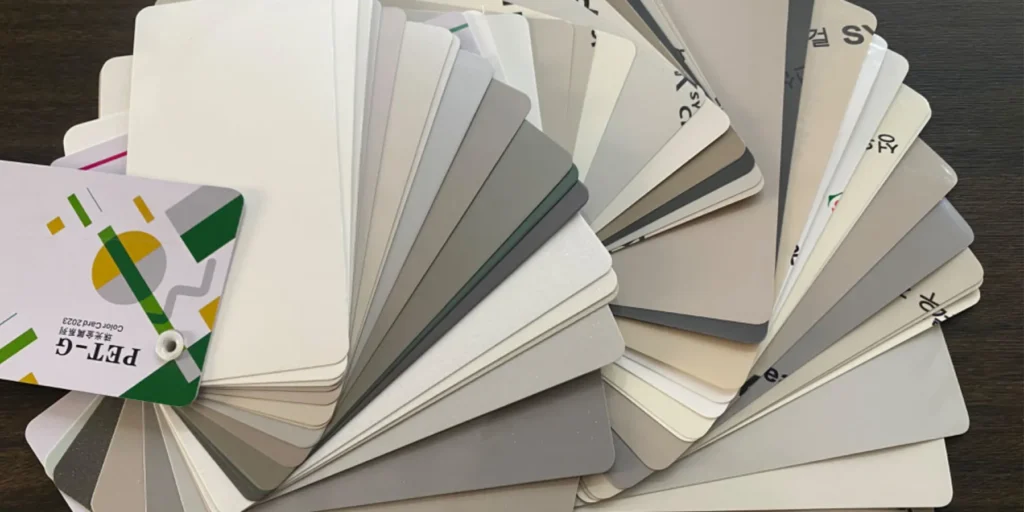
Thermoforming is one of the most widely used manufacturing processes in packaging, medical components, and industrial product design. It allows flat plastic sheets to be heated and molded into precise three-dimensional shapes, offering efficiency and flexibility for mass production. Among the many materials used in this process, PETG-based polymers have become increasingly popular due to their balance of clarity, toughness, and ease of processing.
As industries demand more efficient forming materials that reduce energy consumption while maintaining high-quality output, PETG continues to stand out as a reliable option. Its ability to form complex shapes without losing transparency makes it suitable for both functional and visually demanding applications.
In many manufacturing environments, material choice directly affects production efficiency and final product quality. One widely adopted solution is PETG film, which offers excellent thermoforming behavior, strong impact resistance, and consistent clarity, making it ideal for packaging trays, protective covers, and molded display components.
Why PETG Film Is Ideal for Thermoforming
PETG is a glycol-modified version of PET, designed to improve formability and reduce crystallization during heating. This structural modification gives it a major advantage in thermoforming applications compared to standard PET.
Its key benefits include:
- Lower forming temperature requirements
- High transparency after forming
- Excellent impact resistance
- Minimal shrinkage and distortion
These characteristics make PETG easier to process while ensuring that finished products maintain both strength and visual appeal.
Key Advantages of PETG in Thermoforming Applications
Excellent Forming Flexibility
One of the biggest advantages of PETG is its ability to form complex shapes with high precision. It softens evenly when heated, allowing manufacturers to produce detailed geometries without cracking or whitening.
This makes it especially useful for applications such as medical trays, retail packaging, and protective housings where precision is essential.
High Optical Clarity After Forming
Many plastics lose clarity after thermoforming, especially when stretched or shaped. PETG, however, retains its transparency even after deep forming processes.
This makes it ideal for applications where visibility is important, such as product packaging or display components. The final formed parts maintain a clean, glass-like appearance that enhances product presentation.
Strong Impact Resistance
Thermoformed parts made from PETG are significantly more impact-resistant than those made from many other transparent plastics. This reduces the risk of cracking or breaking during handling, transportation, or end use.
Its toughness ensures long-term durability, especially in applications exposed to frequent contact or mechanical stress.
Reduced Energy Consumption
Because PETG forms at relatively low temperatures, it requires less energy during processing compared to materials that need higher heat levels. This not only reduces production costs but also improves manufacturing efficiency.
Lower forming temperatures also help extend equipment lifespan by reducing thermal stress on machinery.
PETG Thermoforming Processing Techniques
Heating Stage
The first step in thermoforming PETG is controlled heating. The material must be heated evenly to reach its forming temperature without overheating or causing degradation.
Uniform heating is essential to avoid uneven thickness distribution in the final product. Infrared heaters or convection ovens are commonly used for consistent results.
Forming Stage
Once the PETG sheet reaches the optimal temperature, it is transferred to a mold where vacuum or pressure is applied to shape the material.
Vacuum forming is commonly used for simpler designs, while pressure forming is preferred for more detailed and high-precision components.
Proper mold design is critical to ensure smooth surface finish and accurate replication of details.
Cooling Stage
After forming, the material is cooled to lock in its shape. Controlled cooling is important to prevent warping or internal stress buildup.
Rapid but uniform cooling helps maintain dimensional stability and ensures that the final product retains its intended structure.
Trimming and Finishing
Once cooled, excess material is trimmed to achieve the final shape. This stage may include additional finishing processes such as drilling, cutting, or surface polishing depending on application requirements.
PETG’s clean cutting behavior makes post-processing relatively easy compared to more brittle materials.
Common Applications of PETG Thermoforming
PETG is widely used across industries that require durable and visually clear thermoformed components. Typical applications include:
- Medical instrument trays and packaging
- Food and retail packaging containers
- Electronic device protective covers
- Point-of-sale display components
- Industrial protective housings
Its combination of strength and clarity makes it suitable for both functional and aesthetic uses.
Process Optimization Considerations
To achieve the best results in PETG thermoforming, manufacturers must carefully control several factors:
- Heating uniformity to avoid weak spots
- Mold design for accurate shaping
- Cooling rate for dimensional stability
- Material thickness selection based on application
Proper control of these variables ensures consistent product quality and reduces material waste during production.
Conclusion
PETG has become a preferred material for thermoforming due to its excellent balance of formability, strength, and optical clarity. Its ability to form complex shapes at lower temperatures makes it both cost-effective and efficient for large-scale production.
With its wide range of applications across packaging, medical, and industrial sectors, PETG continues to support modern manufacturing needs by offering a reliable and adaptable thermoforming solution.


