


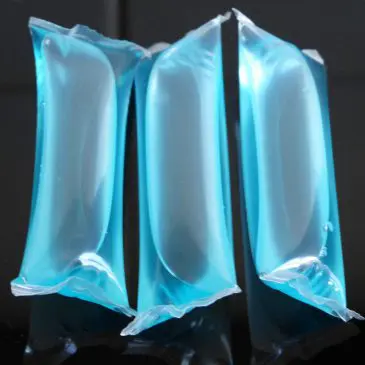
Sustainable packaging has become an important consideration for businesses looking to reduce material use and improve the environmental profile of their products. Among the materials being explored, water soluble film offers specific advantages for applications where packaging needs to dissolve under controlled water conditions.
The role of Water Soluble Film Manufacturers extends beyond producing a dissolvable material. Manufacturers can support sustainable packaging strategies by developing films with suitable material efficiency, controlled dissolution characteristics, and performance properties designed for specific applications. POLYVA is one example of a company operating in the water soluble film sector.
What Makes Water Soluble Film Different?
Water soluble film is commonly produced using polyvinyl alcohol (PVA or PVOH), a polymer known for its ability to dissolve in water under appropriate conditions. This property makes it useful for packaging applications where the packaging material needs to disappear during use rather than remain as a conventional package.
Its water solubility can also simplify the handling of certain pre-measured products. Depending on the application, the film can be designed around specific dissolution temperatures and performance requirements.
Reducing Unnecessary Packaging Material
One way water soluble film can contribute to packaging efficiency is through portion-sized packaging. Instead of using larger containers or manually measuring certain products, individual doses can be enclosed in a dissolvable film.
This approach may help reduce the amount of secondary packaging associated with some applications. It can also provide a consistent quantity of product while limiting direct handling.
Lightweight Film Structures
Film thickness is another factor that can influence material efficiency. Manufacturers can develop different thicknesses according to the mechanical strength and dissolution requirements of an application.
Using an appropriate thickness can help avoid unnecessary material consumption while maintaining sufficient strength for production, transportation, and handling.
Supporting Pre-Measured Product Delivery
Water soluble film is particularly useful for products that can be supplied in predetermined quantities. Applications may include household cleaning products, agricultural formulations, and certain industrial products.
Pre-measured packaging can improve dosing consistency and reduce the need for consumers or workers to handle concentrated formulations directly. The sustainability benefits, however, depend on the complete product and packaging system rather than the film alone.
Designing Film for Specific Applications
Sustainable packaging solutions need to balance environmental considerations with practical performance. A film that does not withstand manufacturing or transportation conditions may result in product waste, which can offset material savings.
Manufacturers therefore consider factors such as:
- Film thickness
- Tensile strength
- Flexibility
- Dissolution rate
- Sealing performance
- Moisture sensitivity
- Storage requirements
Matching these properties to the application can help create packaging that performs reliably throughout its intended lifecycle.
Improving Packaging Efficiency
Water soluble film can also support more efficient packaging processes when it is compatible with automated production equipment. Consistent film thickness and mechanical properties are important for forming, filling, and sealing operations.
Reliable production can reduce material waste caused by film defects or packaging failures. For high-volume operations, even small improvements in process consistency can have a meaningful effect on overall material efficiency.
Minimizing Product Waste
Packaging plays a role in protecting products during storage and transportation. If packaging is poorly suited to its contents, leakage, contamination, or damage can occur.
Selecting a film with appropriate strength and barrier characteristics can help protect the product. Sustainable packaging should therefore be evaluated not only by the amount of packaging material used but also by how effectively it prevents product loss.
Considering the Full Packaging Lifecycle
Water soluble film should not automatically be considered sustainable simply because it dissolves in water. Its overall environmental impact depends on factors such as raw materials, manufacturing energy, transportation, product formulation, disposal conditions, and the behavior of the film after use.
A lifecycle perspective provides a more accurate way to evaluate sustainability. Businesses should examine the complete packaging system rather than focusing on a single material characteristic.
The Importance of Responsible Manufacturing
Manufacturing practices can influence the environmental performance of packaging materials. Factors such as production efficiency, material utilization, quality control, energy consumption, and waste management can all be relevant.
When evaluating suppliers, businesses can ask manufacturers about their production processes, quality systems, material specifications, and approaches to reducing manufacturing waste.
Water Soluble Film in Different Industries
The versatility of water soluble film allows it to be considered for several applications.
Household Cleaning
Pre-measured detergent and cleaning products can use water soluble film to simplify dosing and reduce direct contact with concentrated formulations. The film dissolves during the intended washing or cleaning process when designed for suitable conditions.
Agriculture
Agricultural products can be packaged in predetermined quantities using water soluble film. This can simplify handling and dosing while reducing direct contact with certain concentrated formulations.
Industrial Applications
Industrial chemicals and other specialty products may also use dissolvable film where controlled portioning or reduced handling is beneficial. In these cases, film strength, compatibility, and dissolution characteristics must be carefully matched to the application.
What Businesses Should Consider
Companies considering water soluble film should assess several factors before adopting it as part of a sustainability strategy. These include the intended use, required film properties, manufacturing process, storage environment, disposal conditions, and the overall environmental impact of the packaging system.
It is also important to distinguish between claims about recyclability, biodegradability, water solubility, and overall sustainability. These terms describe different characteristics and should not be treated as interchangeable.
Conclusion
Water soluble film can support sustainable packaging strategies in applications where dissolvable, lightweight, and portion-controlled packaging provides practical advantages. Its potential benefits include efficient material use, simplified dosing, and reduced handling of certain products.
However, sustainability depends on more than whether a film dissolves in water. Material selection, manufacturing efficiency, product protection, transportation, storage, and end-of-life conditions should all be considered. By evaluating these factors together, businesses can determine where water soluble film fits within a broader and more responsible packaging strategy.


