


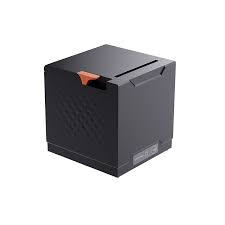
Receipt printers have become important components of modern business operations, supporting transaction processing in retail stores, restaurants, supermarkets, pharmacies, and service environments. As point-of-sale (POS) systems evolve, businesses increasingly expect printing equipment to deliver faster output, reliable connectivity, clear text, and compatibility with different software platforms.
To meet these expectations, manufacturers combine mechanical engineering, electronic components, printing technologies, firmware development, and automated production methods. A modern Receipt Printer Manufacturer uses these technologies to develop equipment that supports different transaction environments while maintaining consistent performance and practical operating costs.
1. Direct Thermal Printing Technology
Direct thermal printing is one of the most widely used technologies in modern receipt printers. It creates text and graphics by applying controlled heat to specially coated thermal paper.
The printing mechanism contains a thermal printhead with numerous heating elements. When the printer receives a command, selected elements heat specific areas of the paper to produce the required characters or images.
This technology offers several advantages:
- No ink cartridges or toner are required.
- Printing is generally fast and quiet.
- The mechanism can be relatively compact.
- Routine consumable management is simplified.
- Maintenance requirements can be lower than those of some ink-based systems.
However, thermal receipts can fade when exposed to excessive heat, sunlight, or unsuitable storage conditions. Manufacturers therefore need to optimize printhead performance and provide clear paper compatibility specifications.
2. Impact Printing Technology
Although thermal printing is common, impact printing remains relevant for certain business applications. Impact printers use a mechanical printhead and an ink ribbon to transfer characters onto paper.
Some models can produce multiple copies using multi-part paper, making them useful for specific transaction and documentation requirements.
Impact printing involves different mechanical components from thermal technology. Manufacturers must pay attention to printhead movement, ribbon feeding, mechanical alignment, and paper handling.
While impact printers may be noisier and require ribbon replacement, they remain useful where particular document formats or duplicate copies are necessary.
3. Advanced Printhead Engineering
<AsyncImage query=”thermal receipt printer printhead close up electronic heating elements macro” aspectRatio=”16:9″ maxHeight={190}/>
The printhead is a critical component in a thermal receipt printer because it directly determines how information is transferred onto paper.
Modern printhead designs use precisely controlled heating elements to create readable text, graphics, and supported barcode patterns. Their performance depends on factors such as element density, heat distribution, electrical control, and contact with the paper.
Manufacturers focus on improving printhead durability, printing consistency, and thermal efficiency.
Important engineering considerations include:
- Accurate heating control.
- Consistent printing density.
- Effective heat dissipation.
- Reliable electrical connections.
- Resistance to repeated operating cycles.
Proper printhead design and maintenance can help maintain output quality and reduce premature component failure.
4. Microprocessors and Embedded Control Systems
Modern receipt printers use embedded electronic systems to coordinate their different functions. A microcontroller or processor manages incoming print commands, processes data, and controls the printing mechanism.
The control system also coordinates sensors, paper movement, communication interfaces, and error notifications.
Depending on the model, embedded processing capabilities may support:
- Processing text and graphic commands.
- Managing print buffers.
- Controlling printhead operation.
- Detecting paper-out conditions.
- Managing automatic cutter functions.
- Handling communication with connected devices.
Efficient embedded systems help printers respond consistently to commands from POS terminals and other compatible equipment.
5. Printed Circuit Board Technology
<AsyncImage query=”printed circuit board PCB assembly SMT electronics manufacturing inspection closeup” aspectRatio=”16:9″ maxHeight={190}/>
Printed circuit boards (PCBs) connect the electronic components responsible for printer operation. They provide the electrical pathways needed for communication between processors, memory, power circuits, sensors, and printing mechanisms.
Modern PCB production commonly uses surface-mount technology (SMT), which allows electronic components to be placed directly onto circuit board surfaces.
Automated placement equipment and soldering processes help manufacturers achieve accurate component positioning and repeatable assembly.
PCB quality is important because electrical defects can cause inconsistent printing, connection problems, or complete device failure. Manufacturers therefore use inspection and electrical testing to verify assembled boards before integrating them into finished printers.
6. Wireless Communication Technologies
Wireless connectivity has become an important feature in many modern receipt printers. It allows compatible devices to communicate without requiring a direct physical connection to every POS terminal.
Common wireless technologies include:
Bluetooth
Bluetooth is frequently used for communication between portable receipt printers and compatible smartphones, tablets, or handheld POS devices.
It is particularly useful in mobile retail, delivery services, and table-side restaurant transactions.
Wi-Fi
Wi-Fi allows printers to connect to compatible wireless networks. This can support flexible placement and communication with multiple devices within a configured network environment.
Wireless performance depends on network quality, configuration, supported standards, and the surrounding environment.
Manufacturers must test connection stability and software compatibility to ensure that wireless printing works reliably in intended applications.
7. USB and Ethernet Interface Technologies
In addition to wireless connections, modern receipt printers use wired interfaces to communicate with POS systems and computers.
USB is widely used for direct connections because it offers a straightforward installation process for compatible devices.
Ethernet is useful in networked business environments where printers need to communicate with multiple terminals or centralized systems.
Some models also support serial interfaces for compatibility with particular legacy POS equipment.
The choice of interface depends on the business environment. Manufacturers must ensure that hardware connections, drivers, and communication protocols work together correctly.
8. Firmware and Printing Command Technologies
Firmware is the internal software that controls a printer’s basic operations. It determines how the device interprets commands and coordinates its electronic and mechanical functions.
Modern receipt printers may support established command languages and protocols that allow POS software to send text, graphics, barcodes, and formatting instructions.
Firmware can also manage paper detection, cutter operation, device status, and error reporting.
Manufacturers need to test firmware carefully because software problems can affect otherwise functional hardware.
Regular firmware development may also improve compatibility, correct technical issues, and introduce support for additional features.
9. Barcode and QR Code Printing Technology
Receipt printers increasingly support the printing of machine-readable information, including traditional barcodes and QR codes.
These elements can be used for transaction references, loyalty programs, promotional campaigns, product information, and digital service links.
The printer receives the required data from compatible POS software and reproduces it using the supported printing commands.
Print clarity is important because poorly reproduced codes may be difficult for scanners or mobile devices to read.
Manufacturers therefore consider print resolution, alignment, paper quality, and supported graphic functions when developing these capabilities.
10. Automatic Paper Cutting Mechanisms
<AsyncImage query=”thermal receipt printer automatic paper cutter mechanism close up” aspectRatio=”16:9″ maxHeight={190}/>
Many modern receipt printers include automatic cutters that separate printed receipts without requiring employees to tear the paper manually.
The cutter generally uses a motor-driven blade mechanism controlled by the printer’s electronic system.
Its design needs to support accurate movement and reliable operation over repeated printing cycles.
Manufacturers evaluate factors such as blade alignment, cutting speed, mechanical resistance, and paper compatibility.
A dependable cutter can improve checkout convenience, particularly in supermarkets, restaurants, and other high-volume environments.
11. Sensors and Intelligent Error Detection
Sensors help receipt printers monitor internal conditions and identify operating problems.
Depending on the model, sensors may detect paper presence, cover position, temperature, or other mechanical conditions.
These functions allow the printer to notify users when intervention is needed. For example, a paper-out sensor can help prevent incomplete printing, while a cover sensor can identify when the printer is not properly closed.
Sensor integration also supports more predictable operation by helping the control system respond to specific conditions.
Manufacturers need to verify sensor accuracy and ensure that error notifications are correctly communicated to connected POS software.
12. Thermal Management and Power Efficiency
Thermal printing involves generating heat at the printhead, so effective thermal management is important for maintaining consistent operation.
Manufacturers must design electronic controls and mechanical structures that manage heat appropriately during repeated printing.
Power management is another important consideration. Efficient circuits can help reduce unnecessary energy consumption, particularly when printers remain connected throughout the business day.
Depending on the model, energy-saving features may include standby functions and optimized power control.
These technologies can help businesses manage operating costs while supporting reliable equipment performance.
13. Cloud-Based Printing and POS Integration
Cloud-based POS systems are changing how businesses manage transactions and connected hardware. Modern receipt printers may be integrated into systems that use internet-connected terminals and centralized software platforms.
Cloud printing arrangements can allow compatible applications to send print jobs through supported services or local network configurations.
This technology can be useful for businesses operating multiple branches or managing several checkout stations.
However, cloud compatibility is not automatic. It depends on the printer model, software platform, communication architecture, and available integration tools.
Manufacturers should provide clear information about supported systems and configuration requirements.
14. Automated Manufacturing and Assembly Technologies
Technological innovation also affects how receipt printers are produced. Modern manufacturing facilities may use automated equipment to improve component placement, assembly accuracy, and production consistency.
Examples include:
- Automated PCB component placement.
- Reflow soldering systems.
- Precision plastic molding.
- Mechanical assembly equipment.
- Automated optical inspection.
- Computerized functional testing.
Automation can help reduce certain production errors and improve repeatability. However, equipment calibration, process monitoring, and skilled technical supervision remain important for maintaining manufacturing quality.
15. Computer-Aided Design and Simulation
Computer-aided design (CAD) software helps engineers develop and refine receipt printer structures before physical production begins.
Design tools can be used to create enclosure models, arrange internal components, and evaluate mechanical dimensions.
Simulation methods may also help engineers examine factors such as structural strength, heat distribution, airflow, and component positioning.
These technologies can identify potential design problems earlier in development, reducing the need for costly physical revisions.
They also support collaboration between mechanical, electronic, and manufacturing teams.
16. Automated Quality Inspection and Testing
Quality inspection technologies help manufacturers verify that completed printers meet established specifications.
Automated optical inspection systems can examine PCB assemblies for visible defects, while electrical testing equipment evaluates circuit performance.
Finished devices may undergo functional tests involving printing speed, text clarity, paper feeding, connectivity, and cutter operation.
Some manufacturers also use repeated operating cycles to assess the durability of key components.
Combining automated inspection with manual evaluation can improve defect detection and support more consistent production outcomes.
17. Technology Supporting Mobile and Portable Printing
Portable receipt printers require specialized engineering because they operate differently from fixed desktop models.
Battery-powered operation, compact construction, wireless communication, and convenient paper loading are important design considerations.
Manufacturers need to balance size, weight, battery capacity, printing speed, and durability.
Mobile printers may also include indicators for battery status, wireless connection, and paper availability.
These features support businesses that process transactions in delivery services, outdoor sales, temporary retail locations, and other mobile environments.
18. Future Technological Developments in Receipt Printing
Receipt printer technology will continue to evolve as business systems become more connected and automated.
Several development areas may influence future product designs:
- More efficient thermal printing mechanisms.
- Improved wireless communication and device management.
- Greater compatibility with cloud-based POS platforms.
- Enhanced diagnostic and monitoring functions.
- Smaller and more portable printer designs.
- Better power management.
- More flexible printed and digital receipt workflows.
Manufacturers will also need to address changing expectations regarding product lifespan, repairability, software compatibility, and environmental impact.
The most useful innovations will be those that solve practical business problems while maintaining dependable operation.
Conclusion
Modern receipt printers rely on a combination of printing mechanisms, embedded electronics, communication interfaces, firmware, sensors, and automated manufacturing technologies. These systems work together to provide the speed, clarity, connectivity, and reliability required by today’s commercial environments.
For businesses evaluating suppliers, understanding these technologies makes it easier to compare product specifications and identify suitable equipment. Manufacturers that combine effective engineering with comprehensive testing and software compatibility can better support the changing requirements of retail, hospitality, and other transaction-based industries.


