


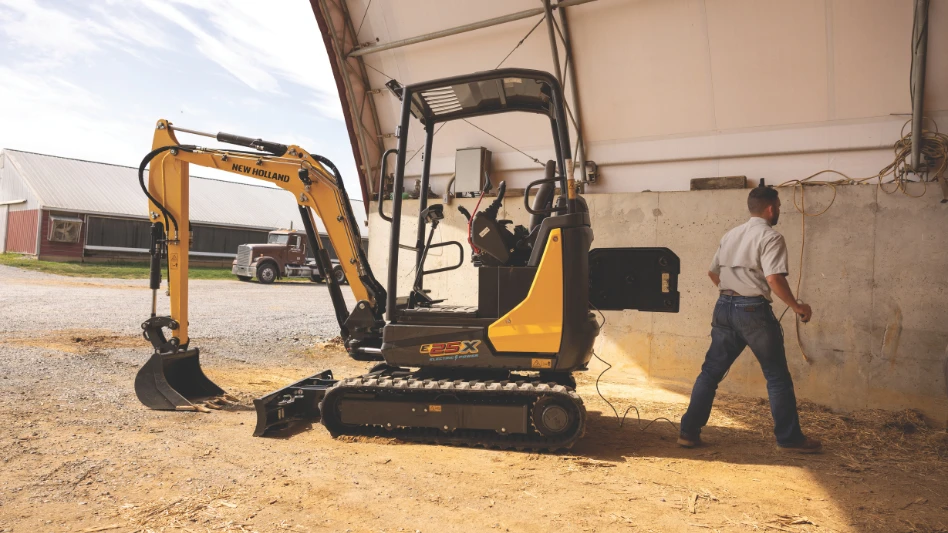
Electric mini excavators are rapidly becoming a preferred choice for contractors and construction businesses due to their efficiency, compact design, and environmentally friendly operation. As the industry shifts toward sustainable and cost-effective machinery, selecting the right equipment has become more important than ever.
When evaluating an electric mini excavator, contractors must consider performance, battery capacity, job site requirements, and long-term operating costs to ensure the machine meets business needs.
Understanding Business Requirements Before Selection
Every contractor or business has different operational demands depending on project type, scale, and environment. Electric mini excavators are used in construction, landscaping, utilities, agriculture, and urban development, so matching the machine to the workload is essential.
Clear identification of job requirements helps avoid underpowered or oversized equipment choices.
Key Factors in Electric Mini Excavator Selection
Battery Capacity and Runtime
Battery capacity directly affects how long the machine can operate on a single charge. Contractors should evaluate daily working hours and choose a model that aligns with expected runtime needs.
Higher-capacity batteries are ideal for long shifts, while smaller units may suit light-duty or short-duration tasks.
Hydraulic Performance and Power Output
Hydraulic efficiency determines digging strength, lifting capacity, and overall productivity. A well-designed hydraulic system ensures smooth and powerful operation even under heavy load conditions.
This is especially important for contractors handling excavation, trenching, or demolition tasks.
Machine Size and Job Site Compatibility
Electric mini excavators are available in different sizes. Compact models are suitable for tight urban spaces, while slightly larger versions offer more power for demanding tasks.
Choosing the correct size ensures better maneuverability and reduced site disruption.
Application-Based Selection Criteria
Construction Projects
For construction work, contractors should prioritize durability, hydraulic strength, and versatility. Electric mini excavators are commonly used for foundation work, trenching, and site preparation.
Landscaping and Residential Work
Landscaping projects require precision and minimal ground disturbance. Smaller electric mini excavators with smooth control systems are ideal for garden work and residential properties.
Utility and Infrastructure Projects
For utility installation, accuracy and maneuverability are key. Machines must be capable of working in narrow trenches and urban environments with minimal disruption.
Operational Efficiency Considerations
Charging Infrastructure Availability
Contractors should evaluate access to charging facilities on job sites. Reliable charging solutions ensure uninterrupted workflow and reduce downtime.
Fast-charging capability can also improve operational flexibility.
Maintenance Requirements
Electric mini excavators require less maintenance than diesel machines. However, businesses should still consider battery care, hydraulic servicing, and electrical system checks.
Lower maintenance needs reduce long-term operating costs.
Cost and Return on Investment
While initial purchase costs may vary, electric mini excavators often provide better long-term value due to lower fuel consumption and reduced maintenance expenses.
Contractors should evaluate:
- Total cost of ownership
- Expected equipment lifespan
- Fuel and energy savings
- Productivity improvements
This helps determine overall return on investment.
Operator Skill and Ease of Use
Electric mini excavators are generally easier to operate due to simplified controls and smooth electric power delivery. This reduces training time and improves job site efficiency.
For businesses, this means faster onboarding of operators and fewer operational errors.
Environmental and Regulatory Factors
Many regions now enforce strict environmental regulations on construction equipment. Electric mini excavators help contractors comply with emissions standards and noise restrictions.
This can also open opportunities for government and urban contracts.
Durability and Build Quality
Contractors should prioritize machines with strong structural design and high-quality components. Durability ensures long service life even under demanding working conditions.
A reliable machine reduces downtime and improves project consistency.
Future-Proofing Equipment Investment
As construction continues to move toward electrification, investing in electric machinery helps businesses stay competitive. Advancements in battery technology and automation will further enhance performance in the coming years.
Selecting the right model today ensures long-term adaptability.
Conclusion
Choosing the right electric mini excavator requires careful evaluation of battery capacity, hydraulic performance, job site needs, and long-term operational costs. Contractors and businesses that make informed decisions can improve efficiency, reduce expenses, and meet environmental requirements. When selecting an electric mini excavator, focusing on application suitability and total value ensures a smarter and more sustainable investment for future construction demands.


