


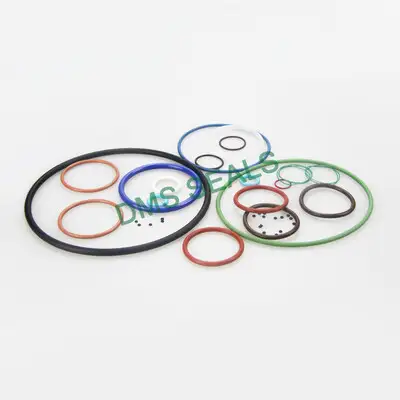
Custom O-rings play an important role in industrial applications where standard sealing components cannot meet specific equipment requirements. Different machinery and operating environments may require unique dimensions, material properties, temperature resistance, or pressure capabilities. In these situations, customized sealing solutions help achieve a more accurate fit and dependable performance.
The manufacturing of custom O-rings involves several stages, beginning with understanding application requirements and selecting suitable raw materials. An experienced O Ring Manufacturer considers every stage of production to ensure that the finished product meets the required specifications. Understanding this process helps businesses make informed decisions when sourcing specialized sealing components.
1. Understanding Custom O-Ring Requirements
The first step in custom O-ring manufacturing is identifying the exact requirements of the intended application. Manufacturers need sufficient technical information to determine the appropriate dimensions, material, and production method.
Important details typically include:
- Inside diameter and cross-sectional thickness.
- Operating temperature range.
- Working pressure and system conditions.
- Type of fluid or gas in contact with the seal.
- Static or dynamic sealing requirements.
- Expected service life and environmental exposure.
Providing accurate information at this stage reduces design errors and helps establish suitable manufacturing specifications.
2. Selecting the Right Material
Material selection is one of the most important decisions in the manufacturing process. Different elastomers have different physical and chemical properties, making them suitable for particular operating environments.
Nitrile Rubber (NBR)
NBR is commonly used in hydraulic systems, automotive equipment, and industrial machinery. It offers good resistance to petroleum-based oils, fuels, and abrasion.
Fluorocarbon (FKM)
FKM is frequently selected for applications involving elevated temperatures, oils, fuels, and many chemicals. It is suitable for several demanding industrial environments.
Ethylene Propylene Diene Monomer (EPDM)
EPDM provides good resistance to water, steam, ozone, and weathering. It is commonly used in outdoor installations and water-related applications.
Silicone Rubber
Silicone offers flexibility across a broad temperature range. It is used in applications where temperature performance and material flexibility are important considerations.
Neoprene Rubber
Neoprene provides a combination of flexibility, weather resistance, and resistance to certain oils and chemicals.
The final material choice should depend on the actual operating conditions rather than material popularity alone.
3. Determining Dimensions and Design Specifications
After selecting the material, manufacturers establish the dimensional requirements of the custom O-ring.
The three primary measurements are:
- Inside Diameter (ID): The diameter of the inner opening.
- Cross-Sectional Diameter (CS): The thickness of the elastomer material.
- Outside Diameter (OD): The overall external diameter of the ring.
The relationship between these measurements can be expressed as:
[
OD = ID + 2(CS)
]
Accurate measurements are essential because an incorrectly sized O-ring may stretch excessively, become compressed beyond its intended limits, or fail to create an effective seal.
Manufacturers also consider groove dimensions, compression requirements, and installation conditions when finalizing the design.
4. Choosing the Appropriate Manufacturing Method
Different production methods are used to manufacture custom O-rings. The most appropriate technique depends on the elastomer, product design, required quantities, and manufacturing specifications.
Compression Molding
Compression molding involves placing a measured quantity of elastomer into a heated mold. Pressure and temperature are applied to shape and cure the material.
This method is commonly used for rubber components and can accommodate various custom designs.
Injection Molding
Injection molding involves injecting prepared elastomer material into a closed mold under controlled conditions.
It is often suitable for higher-volume production where repeatability and production efficiency are important.
Transfer Molding
Transfer molding uses pressure to move elastomer material from a separate chamber into a mold cavity. It can be useful for producing certain complex rubber components with controlled dimensions.
Selecting the right process helps manufacturers balance production efficiency, product consistency, and manufacturing costs.
5. Mold Preparation and Tooling
Mold preparation is an important stage in custom O-ring production. The mold determines the shape and dimensions of the finished component.
Manufacturers develop tooling according to the approved product specifications. Mold design must account for the material’s behavior during curing and any dimensional changes associated with the manufacturing process.
Proper mold preparation helps minimize defects such as incomplete filling, irregular surfaces, and dimensional variations.
For businesses requiring specialized O-rings, tooling accuracy is particularly important because even small differences can affect installation and sealing performance.
6. Molding and Curing Process
Once the material and mold are prepared, the manufacturing process moves to molding and curing.
During this stage, elastomer material is shaped into the required O-ring profile. Controlled temperature, pressure, and curing time help the material develop its intended physical properties.
The curing process is especially important because it influences elasticity, strength, hardness, and resistance to deformation.
Manufacturers must follow suitable process parameters for the selected compound to achieve consistent results.
7. Trimming and Surface Finishing
After molding, O-rings may contain excess material known as flash around their edges or parting lines.
This material must be removed through appropriate trimming or finishing procedures.
Common finishing activities include:
- Removing excess rubber.
- Inspecting the sealing surface.
- Checking for visible cuts or irregularities.
- Ensuring consistent product appearance.
- Preparing products for final inspection.
Careful finishing helps ensure that the O-rings can be installed properly without surface imperfections affecting their sealing function.
8. Quality Inspection and Testing
Quality inspection is essential before custom O-rings are approved for delivery. Manufacturers must verify that the finished products meet the agreed specifications.
Depending on the application, inspection may include:
Dimensional inspection: Checking inside diameter, cross-sectional thickness, and dimensional tolerances.
Hardness testing: Measuring the material’s resistance to indentation using an appropriate hardness scale.
Visual inspection: Identifying cracks, cuts, surface defects, or incomplete molding.
Compression set testing: Evaluating the material’s ability to recover after prolonged compression.
Physical property testing: Assessing relevant characteristics such as tensile strength and elongation.
Additional chemical compatibility or temperature-related testing may be necessary for specialized applications.
These checks help confirm that the finished products are suitable for their intended operating environments.
9. Packaging and Final Production Preparation
Once inspection is complete, approved O-rings are prepared for packaging and delivery.
Packaging should protect the components from contamination, physical damage, and unsuitable storage conditions.
Manufacturers may organize products according to material, size, batch number, or customer specifications. Clear identification makes it easier for businesses to manage inventory and distinguish between different sealing components.
Proper handling and storage are also important because excessive heat, sunlight, ozone exposure, or unsuitable environmental conditions can affect elastomer properties over time.
10. Why Custom O-Ring Manufacturing Matters
Custom manufacturing provides businesses with greater flexibility when standard sealing components cannot satisfy particular technical requirements.
Some important benefits include:
- Improved equipment compatibility: Custom dimensions help achieve a suitable fit within specialized machinery.
- Application-specific materials: Different elastomers can be selected according to operating conditions.
- Better sealing performance: Proper design and material selection help reduce leakage risks.
- Greater design flexibility: Specialized requirements can be addressed through customized specifications.
- More controlled procurement: Businesses can source components that match their equipment rather than modifying systems to accommodate standard products.
However, customization should always be based on accurate engineering information and suitable testing.
11. How to Choose a Manufacturer for Custom O-Rings
Selecting the right manufacturing partner is essential for achieving consistent product quality.
Before placing an order, businesses should evaluate several factors, including manufacturing experience, available materials, production methods, quality control procedures, and customization capabilities.
It is also useful to ask whether the manufacturer can work from technical drawings, provide product samples, and maintain consistent specifications across repeat orders.
Clear communication about quantities, delivery schedules, and inspection requirements can further improve the manufacturing process.
Conclusion
Custom O-ring manufacturing involves a series of connected stages, from understanding application requirements and selecting suitable materials to molding, finishing, and final quality inspection. Each stage contributes to the dimensions, durability, and sealing performance of the finished component.
Businesses that require specialized sealing solutions should pay close attention to material compatibility, dimensional accuracy, manufacturing methods, and quality assurance. Working with a capable manufacturing partner and providing accurate technical specifications can help ensure that custom O-rings meet operational requirements and support reliable equipment performance.


