


In modern metal processing industries, efficiency and production capacity are two of the most important performance indicators. Manufacturers rely on advanced surface treatment systems to ensure high output while maintaining consistent quality standards. Among these systems, continuous coil coating technology has become a core solution for large-scale steel and aluminum processing operations.
A modern color coating line is designed to deliver stable, high-speed production while maintaining precise control over coating thickness, surface quality, and curing performance. However, its efficiency and capacity are influenced by several interconnected technical and operational factors. Understanding these factors is essential for optimizing production performance and reducing operational costs in industrial environments.
Line Speed and Production Throughput
One of the most direct factors affecting production capacity is line speed. The faster the coil moves through the system, the higher the output volume.
However, increasing speed must be balanced with process stability. If the line operates too quickly, it may compromise coating uniformity or curing quality. Therefore, manufacturers must carefully adjust speed settings based on coating type, material thickness, and oven performance to achieve optimal results.
Coating Material and Application Accuracy
The type of coating used plays a significant role in determining both efficiency and final product quality. Different coatings such as polyester, epoxy, and PVDF have varying drying times and viscosity levels, which directly affect production speed.
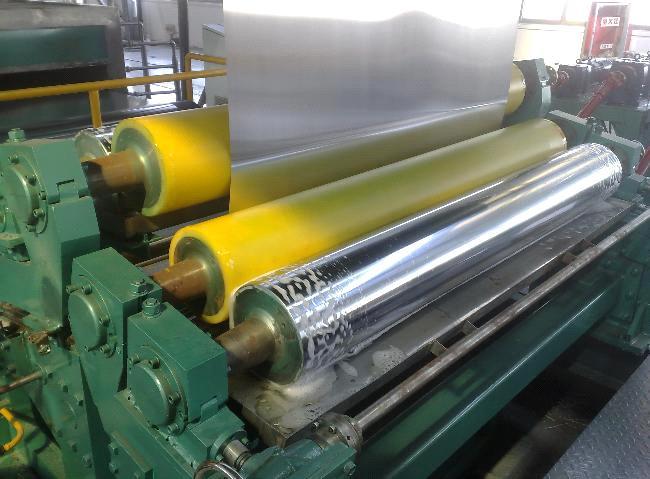
Accurate application is equally important. Roller coating systems must maintain consistent thickness across the entire metal surface to prevent defects such as uneven color, streaking, or peeling. Even minor deviations can lead to product rejection and reduced efficiency.
Pretreatment Quality and Surface Preparation
Surface preparation is a critical stage that directly influences coating adhesion and long-term durability. If the pretreatment process is not properly controlled, it can reduce both product quality and production efficiency.
Key pretreatment factors include:
- Proper degreasing to remove oil and contaminants
- Effective rinsing to avoid chemical residue
- High-quality conversion coating for improved adhesion
- Thorough drying before coating application
Poor surface preparation often leads to rework, which significantly reduces overall production capacity.
Oven Performance and Curing Efficiency
The curing oven is one of the most energy-intensive and critical components in a coating system. Its performance directly affects coating durability and production speed.
Temperature uniformity, heat distribution, and airflow control are essential for proper curing. If the oven is not optimized, defects such as incomplete curing or surface blistering may occur, requiring additional processing time.
Efficient thermal management not only improves product quality but also reduces energy consumption, contributing to better overall system performance.
Automation and Control Systems
Modern production lines rely heavily on automation to maintain consistent quality and maximize efficiency. Advanced PLC systems and sensors continuously monitor key parameters such as line speed, temperature, and coating thickness.
Automation provides several advantages:
- Reduced manual intervention and operator error
- Real-time monitoring of production parameters
- Quick detection and correction of process deviations
- Improved synchronization between different line sections
These capabilities ensure that the entire system operates smoothly with minimal downtime.
Maintenance and Operational Stability
Regular maintenance is essential for sustaining long-term production capacity. Equipment wear, dust accumulation, and mechanical misalignment can significantly impact efficiency if not properly managed.
Preventive maintenance practices help ensure stable operation and reduce unexpected breakdowns. Well-maintained equipment also improves consistency in coating quality and reduces production interruptions.
Material Handling and Coil Quality
The quality of incoming metal coils also affects overall performance. Coils with surface defects, inconsistent thickness, or poor flatness can slow down production and increase rejection rates.
Proper handling during loading and unloading is equally important to prevent scratches and deformation, which can affect coating results and reduce usable output.
Conclusion
The efficiency and production capacity of a color coating line depend on a combination of mechanical, chemical, and operational factors. From line speed and coating materials to pretreatment quality and automation systems, each element plays a vital role in determining overall performance. By optimizing these factors, manufacturers can achieve higher productivity, better coating quality, and reduced operational costs, making continuous coating technology a key asset in modern metal processing industries.


