


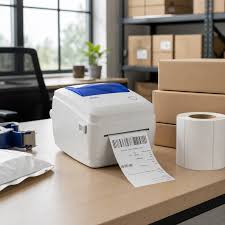
Thermal printing technology has become an important part of modern business operations, supporting applications such as receipt printing, barcode labeling, shipping documentation, product identification, and inventory management. As businesses adopt more automated processes, their expectations for printing equipment continue to increase. They need devices that offer consistent print quality, reliable connectivity, efficient operation, and compatibility with modern software systems.
A professional Thermal Printer Manufacturer increasingly relies on advanced technology to improve product design, manufacturing efficiency, and equipment performance. Developments in electronic engineering, automation, artificial intelligence, wireless communication, and quality testing are changing how thermal printers are designed and produced. These innovations help manufacturers respond to evolving market requirements while developing products for different industries and business applications.
1. Computer-Aided Design in Printer Development
Computer-aided design (CAD) software plays an important role in modern thermal printer development. Engineers use digital design tools to create detailed product models, examine component arrangements, and refine mechanical structures before physical production begins.
CAD technology helps development teams evaluate factors such as housing dimensions, internal component placement, paper paths, and assembly requirements.
Its advantages include:
- More accurate product dimensions
- Improved component positioning
- Easier design modifications
- Better coordination between engineering teams
- Reduced need for repeated physical prototypes
- More efficient product development
By identifying potential design problems earlier, manufacturers can reduce development delays and improve the overall quality of new printer models.
2. Advanced Electronic Engineering
Modern thermal printers depend on electronic systems that control printing, power distribution, sensors, and communication functions.
Advanced electronic engineering allows manufacturers to develop more capable control boards and improve how different components work together.
The main control board manages operations such as printhead activation, motor movement, paper detection, and error reporting.
Engineers must consider electrical stability, signal accuracy, component compatibility, and power requirements during development.
Improvements in electronic design can support more reliable printing, efficient processing, and additional features without unnecessarily increasing product complexity.
3. Automation in Manufacturing Processes
Manufacturing automation is changing how electronic devices are assembled and inspected. Thermal printer production can involve repetitive tasks that benefit from automated equipment and standardized production systems.
Depending on the factory setup, automation may support:
- Circuit board assembly
- Component placement
- Screw fastening
- Product testing
- Visual inspection
- Packaging operations
Automated equipment can improve repeatability and reduce certain types of human error. However, skilled technicians and quality engineers remain important for monitoring production, handling exceptions, and evaluating complex defects.
Combining automation with effective production management helps manufacturers maintain consistent assembly standards.
4. Artificial Intelligence in Quality Inspection
Artificial intelligence is creating new opportunities for manufacturing inspection and process analysis.
Computer vision systems can be used to examine product surfaces, identify visible defects, and compare assembled components with predefined quality requirements.
In suitable manufacturing environments, AI-supported systems may help detect:
- Scratches or surface damage
- Incorrect component placement
- Missing parts
- Assembly inconsistencies
- Packaging defects
- Irregular product dimensions
AI can also help analyze production data to identify recurring quality problems.
These systems require appropriate training data, reliable inspection equipment, and human oversight. They are most effective when used as part of a broader quality management process rather than as a complete replacement for experienced inspectors.
5. Improved Thermal Printhead Technology
The thermal printhead is one of the most important components in a thermal printer. It contains heating elements that generate the patterns required to produce text, graphics, and barcodes.
Advances in printhead design and control electronics can help improve printing consistency, resolution, and operational efficiency.
Manufacturers focus on factors such as:
- Heating element accuracy
- Temperature control
- Print density
- Heat distribution
- Component durability
- Compatibility with supported media
Better control of the printing process can help produce clearer output and reduce problems such as uneven darkness or incomplete images.
Printhead performance also depends on appropriate media selection, correct operating settings, and routine maintenance.
6. Robotics and Precision Assembly
Robotics can support certain stages of electronic product manufacturing where accurate and repeatable movement is required.
In thermal printer production, robotic systems may assist with component handling, circuit board placement, fastening, or other repetitive assembly tasks.
Precision automation can help manufacturers maintain consistent component positioning and reduce variations between production units.
However, not every assembly operation is suitable for full automation. Complex configurations, specialized adjustments, and final inspections may still require trained production personnel.
The most effective manufacturing systems combine automated processes with human technical expertise.
7. Internet of Things and Connected Printer Technology
The Internet of Things (IoT) is connecting business devices through networks and software platforms. Thermal printers can participate in these environments when equipped with suitable interfaces and supported software.
Connected printers may communicate with POS systems, inventory platforms, warehouse management software, and centralized device management tools.
Depending on the product and application, connected features can support:
- Remote device monitoring
- Network-based printing
- Printer status reporting
- Centralized configuration
- Usage monitoring
- Remote troubleshooting
These capabilities are useful for businesses operating multiple printers across different locations.
Manufacturers must also consider network security, software compatibility, and reliable communication when developing connected printing products.
8. Wireless Communication and Mobile Printing
Wireless connectivity has expanded the range of applications for thermal printers.
Traditional printers often rely on direct cable connections, while modern models may offer Bluetooth or Wi-Fi for communication with compatible devices.
This supports mobile and flexible business operations.
For example, restaurant employees can print orders from supported tablets, delivery personnel can produce documentation in the field, and retail staff can use mobile checkout equipment.
Future improvements in wireless technology may make printer installation and device management more convenient.
When selecting equipment, businesses should confirm that the printer supports the required wireless standards and is compatible with their existing software and devices.
9. Cloud-Based Printer Management
Cloud computing is influencing how businesses manage connected equipment.
Cloud-enabled printing solutions can allow compatible printers to receive instructions through network-based applications and centralized platforms.
For organizations with multiple branches, this can simplify the management of printing activities across different locations.
Potential benefits include:
- Centralized printer configuration
- Remote device status monitoring
- Easier deployment of printing tasks
- Improved coordination between business systems
- More flexible management of distributed equipment
Cloud functionality depends on the printer’s hardware, software, network environment, and the platform being used. Manufacturers therefore need to consider integration requirements during product development.
10. Advanced Barcode and Label Printing Technology
Barcode printing is essential for inventory management, logistics, retail, and manufacturing.
Modern thermal printers can produce different barcode formats, product labels, shipping labels, and identification tags according to application requirements.
Advanced printing controls help improve the positioning and clarity of printed elements.
Manufacturers must evaluate:
- Print resolution
- Media compatibility
- Label alignment
- Print density
- Printing speed
- Barcode readability
Some specialized printers also support RFID encoding, allowing compatible labels to combine visible printed information with electronically stored identification data.
These technologies help businesses improve product tracking and automate identification processes.
11. Software Development and Firmware Innovation
Hardware performance depends partly on the quality of the software that controls it.
Printer firmware manages important functions such as printhead operation, motor movement, paper detection, and communication with external devices.
Manufacturers also develop drivers, configuration tools, and software development kits to support integration with business applications.
Advanced software development can improve:
- Operating system compatibility
- Communication stability
- Printing command support
- Configuration flexibility
- Error detection
- Firmware maintenance
- Integration with POS and inventory platforms
Testing firmware alongside the physical printer is important because software errors can affect otherwise reliable hardware.
12. Digital Simulation and Virtual Prototyping
Digital simulation allows engineers to examine product behavior before building physical prototypes.
Depending on the design, simulation tools can help evaluate mechanical movement, component positioning, thermal behavior, and structural performance.
This approach can reduce the number of physical design revisions required during development.
For example, engineers may use digital models to examine how a paper-feeding mechanism moves or how internal components are arranged within a compact housing.
Virtual prototyping does not eliminate physical testing. Actual products must still undergo functional and performance evaluation to confirm that they meet the required specifications.
13. Advanced Testing and Quality Control Equipment
Modern manufacturing facilities may use specialized equipment to inspect and test thermal printers more consistently.
Automated test systems can verify functions such as printing, paper feeding, communication, and sensor responses.
Depending on the product, quality testing may include:
- Print quality inspection
- Barcode scanning
- Electrical testing
- Interface communication checks
- Paper-feeding cycle tests
- Cutter operation tests
- Temperature and humidity evaluation
Digital inspection records can also help manufacturers track defects and identify recurring production problems.
Combining modern testing equipment with documented quality procedures helps improve production consistency.
14. Predictive Maintenance and Data Analysis
Data analysis can help businesses and manufacturers understand how printers perform during regular operation.
Where compatible monitoring systems are available, operational data may provide information about print volume, device status, recurring errors, and component usage.
Predictive maintenance systems can analyze these patterns to identify conditions that may indicate future equipment problems.
Potential applications include:
- Identifying repeated paper-feeding errors
- Monitoring usage levels
- Detecting unusual operating patterns
- Planning maintenance activities
- Improving service scheduling
Predictive maintenance depends on suitable sensors, accessible data, and effective analytical software. It should complement regular inspection and manufacturer-recommended maintenance.
15. Energy-Efficient Manufacturing and Printer Design
Energy efficiency is becoming an important consideration in both product development and factory operations.
Manufacturers can examine ways to reduce energy consumption during printing, standby operation, and production activities.
Possible improvements include:
- More efficient electronic components
- Optimized printhead control
- Lower-power standby modes
- Improved manufacturing equipment
- Reduced material waste
- Better production planning
The actual energy savings depend on the printer design and operating conditions. Businesses should review technical specifications and compare energy requirements when evaluating different models.
16. Sustainable Materials and Production Practices
Environmental responsibility is influencing product development across the electronics industry.
Thermal printer manufacturers may explore more efficient material use, recyclable packaging, improved component durability, and responsible sourcing practices.
Sustainable production initiatives can include:
- Reducing manufacturing waste
- Improving packaging efficiency
- Using suitable recycled materials
- Extending product service life
- Managing electronic waste responsibly
- Improving energy use in production facilities
Thermal printing itself also has environmental considerations. Direct thermal printers do not require ink or toner cartridges, but thermal paper coatings, label adhesives, and electronic components still need appropriate handling and disposal.
17. Customization Through Modern Engineering
Different industries have different printing requirements, making product customization valuable in some applications.
Advanced design tools and flexible production systems can help manufacturers develop customized thermal printers or modify existing models.
Customization may involve:
- Housing design
- Printing width
- Interface configurations
- Firmware settings
- Branding and logo placement
- Mounting arrangements
- Packaging and documentation
OEM and ODM manufacturing services can support businesses that need branded equipment or specialized printing solutions.
Successful customization requires clear specifications, prototype evaluation, and agreement on production costs and delivery schedules.
18. Technology Integration in Smart Manufacturing
Smart manufacturing combines connected machines, digital production systems, sensors, and automated processes.
Thermal printers can support these environments by producing labels for components, production batches, equipment, and finished products.
When integrated with manufacturing software, printers can receive information automatically as products move through different production stages.
This can support:
- Product identification
- Batch tracking
- Quality control documentation
- Inventory management
- Production traceability
- Warehouse coordination
Manufacturers developing industrial printing equipment must consider software compatibility, communication reliability, and suitability for the intended production environment.
19. The Importance of Research and Development
Research and development helps manufacturers respond to technological changes and customer requirements.
Engineering teams may investigate improved printheads, more capable control boards, compact product structures, advanced connectivity, and more efficient production techniques.
R&D activities can also focus on reducing component failures, improving user convenience, and developing equipment for specialized industries.
Businesses evaluating manufacturers should consider their engineering resources, product development history, and ability to support technical customization.
A company that invests in product improvement may be better positioned to adapt as business printing requirements change.
20. How Advanced Technology Is Shaping the Future of Thermal Printer Manufacturing
The combination of automation, artificial intelligence, cloud connectivity, advanced electronics, and digital engineering is changing the thermal printer manufacturing landscape.
Future development is likely to focus on several important areas:
Smarter production systems: Greater use of automated assembly and digital inspection.
Improved connectivity: Better integration with mobile devices, networks, and cloud platforms.
More reliable components: Continued improvements in printhead design, motors, and control electronics.
Advanced monitoring: Better tools for tracking printer status and planning maintenance.
Sustainable manufacturing: More efficient resource use and improved product repairability.
Flexible product development: Greater ability to customize printing equipment for specialized applications.
Businesses will benefit from evaluating these developments according to their actual operational needs rather than adopting new features simply because they are available.
Conclusion
Advanced technology is playing an increasingly important role in modern thermal printer manufacturing. Computer-aided design, automation, artificial intelligence, improved printheads, connected software, digital testing, and sustainable production methods are helping manufacturers develop more capable printing equipment.
These innovations can improve manufacturing consistency, product functionality, and compatibility with modern business systems. However, reliable results still depend on sound engineering, suitable components, effective quality control, and proper product testing. Businesses selecting thermal printing equipment should consider both technological capabilities and long-term reliability to ensure that their chosen solutions meet current requirements and support future operational growth.


