


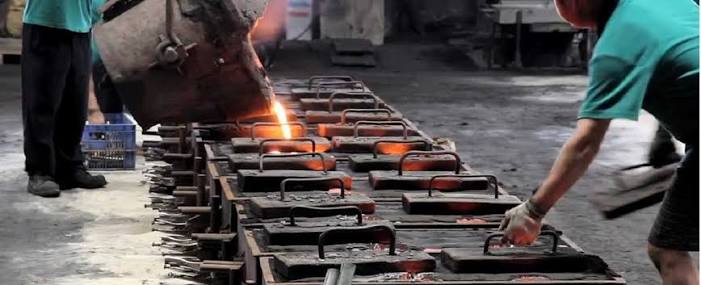
The quality and efficiency of iron casting production depend heavily on the equipment used throughout the manufacturing process. From melting furnaces and molding machines to automated pouring systems and precision inspection tools, modern foundry equipment helps manufacturers produce industrial components with greater consistency and control. As manufacturing requirements become more demanding, foundries are increasingly investing in advanced machinery to improve productivity, reduce defects, and maintain reliable product standards.
Traditional casting methods often involve labor-intensive operations and manual process adjustments. Modern equipment introduces improved temperature monitoring, automated material handling, digital controls, and more accurate inspection methods. For an experienced Iron Castings Manufacturer, selecting suitable foundry equipment is essential for managing production requirements and delivering components that meet customer specifications.
1. Understanding Modern Foundry Equipment
<AsyncImage query=”modern industrial iron foundry production facility advanced casting machinery” aspectRatio=”16:9″ width=”100%”/>
Modern foundry equipment includes the machinery, tools, and digital systems used to produce, process, and inspect metal castings. These systems support different stages of manufacturing, from preparing raw materials to finishing completed components.
Common types of equipment include:
- Induction and other industrial melting furnaces.
- Automated molding machines.
- Sand mixing and reclamation systems.
- Core-making equipment.
- Molten metal pouring systems.
- Shakeout and shot blasting machines.
- Grinding and finishing equipment.
- Heat treatment furnaces.
- Dimensional and material testing instruments.
Each equipment category performs a specific function, but their effectiveness depends on how well they work together. A coordinated production setup helps maintain consistent conditions throughout the casting process.
2. Advanced Melting Furnaces Improve Metal Preparation
<AsyncImage query=”industrial induction furnace melting iron foundry molten metal” aspectRatio=”16:9″ width=”100%”/>
Melting is one of the most important stages in iron casting production. The selected furnace must melt the charge materials efficiently while allowing operators to control temperature and maintain the required metal composition.
Modern induction furnaces use electromagnetic energy to heat and melt metal. They offer controlled heating and can support accurate temperature management when properly operated.
Advanced melting equipment provides several benefits:
Improved temperature control: Digital monitoring helps operators maintain suitable melting conditions.
Consistent metal preparation: Controlled furnace operations support repeatable production procedures.
Operational efficiency: Suitable furnace systems can improve energy use and production planning.
Better process monitoring: Operators can record important melting information for quality management.
The choice of furnace depends on production volume, iron grade, energy availability, operating costs, and the foundry’s manufacturing requirements.
3. Automated Molding Machines Improve Production Consistency
<AsyncImage query=”automatic sand molding machine iron casting foundry production line” aspectRatio=”16:9″ width=”100%”/>
Mold preparation directly influences the shape, surface condition, and dimensional accuracy of iron castings. Traditional manual molding can produce variations because of differences in compaction, sand preparation, and operator technique.
Modern molding machines automate important parts of this process. They help control sand filling, compaction pressure, mold dimensions, and production cycles.
These systems are particularly useful for foundries manufacturing repeated batches of similar components.
Benefits of automated molding include:
- More uniform mold dimensions.
- Consistent sand compaction.
- Higher production capacity.
- Reduced repetitive manual work.
- Better repeatability between production cycles.
Although automated equipment improves consistency, mold quality still depends on suitable sand properties, pattern design, and proper machine maintenance.
4. Modern Sand Preparation and Reclamation Systems
Molding sand must have suitable properties to create stable molds. Moisture content, grain distribution, bonding strength, and permeability all influence casting performance.
Modern sand preparation systems use controlled mixing and material handling equipment to maintain more consistent sand conditions.
Sand reclamation systems also allow suitable used sand to be processed for reuse. Depending on the reclamation method, unwanted materials and residues can be removed before the sand returns to the preparation process.
These systems can help foundries:
- Maintain more consistent molding materials.
- Reduce manual mixing operations.
- Improve sand reuse.
- Manage material waste.
- Support more efficient production workflows.
Effective sand management is important for controlling production costs and reducing defects associated with unsuitable mold conditions.
5. Improved Core-Making Equipment Supports Complex Designs
Cores are used to create internal cavities, passages, and hollow sections in iron castings. Their accuracy is important because core movement or dimensional variation can affect the finished component.
Modern core-making equipment helps manufacturers produce cores with controlled dimensions and repeatable properties.
Depending on the production method, equipment may include automatic sand mixing systems, core shooting machines, curing systems, and core handling devices.
Advanced core-making capabilities support components such as:
- Pump housings.
- Engine-related components.
- Gearbox housings.
- Valve bodies.
- Industrial machine parts.
Accurate cores help maintain internal geometry and reduce the need for additional corrective work.
6. Automated Pouring Equipment Improves Metal Handling
<AsyncImage query=”robotic automated molten iron pouring ladle sand mold industrial foundry” aspectRatio=”16:9″ width=”100%”/>
Pouring molten iron into molds requires careful control of metal temperature, pouring speed, and positioning. Inconsistent pouring conditions can contribute to incomplete filling, turbulence, and other casting problems.
Modern pouring equipment may include automated ladle systems, controlled tilting mechanisms, and robotic pouring units.
These systems help maintain repeatable pouring movements and reduce the need for direct manual handling during selected operations.
Important advantages include:
- More consistent pouring conditions.
- Better control of metal flow.
- Reduced exposure to molten metal handling.
- Improved production repeatability.
- Easier integration with automated molding lines.
Automated pouring does not remove the need for experienced operators. Workers must still monitor metal quality, mold readiness, equipment condition, and safety procedures.
7. Digital Temperature Monitoring Improves Process Control
Temperature affects molten iron fluidity, mold filling, and solidification behavior. If the metal is too hot or too cold for the intended process, casting quality may be affected.
Modern temperature measurement equipment provides more accurate information during melting, holding, and pouring operations.
Digital systems may use thermocouples, immersion probes, infrared instruments, and connected monitoring platforms.
They help operators:
- Check furnace temperature.
- Monitor molten metal before pouring.
- Identify unexpected temperature variations.
- Record production conditions.
- Adjust operating procedures when necessary.
Accurate temperature monitoring supports more consistent manufacturing and helps reduce avoidable process variation.
8. Modern Shakeout and Cleaning Equipment Speeds Up Processing
<AsyncImage query=”industrial iron foundry casting shakeout machine vibrating sand separation” aspectRatio=”16:9″ width=”100%”/>
After solidification, castings must be separated from their molds. This operation is commonly known as shakeout.
Modern shakeout machines use controlled vibration or mechanical movement to separate cast components from molding sand. They can improve material handling and reduce the amount of manual work required.
After shakeout, castings may undergo additional cleaning to remove sand, scale, and other unwanted material.
Automated cleaning equipment can help maintain more consistent processing conditions, especially when handling large production volumes.
Proper equipment selection depends on casting size, weight, geometry, and the characteristics of the molding materials.
9. Shot Blasting and Surface Finishing Equipment Improve Appearance
Iron castings may require surface cleaning before inspection, machining, coating, or assembly. Shot blasting equipment uses abrasive media to remove loose sand, scale, and surface contaminants.
Modern shot blasting machines provide controlled cleaning through rotating tables, tumbling systems, or other specialized arrangements.
Grinding and deburring equipment is also used to remove gates, risers, flash, and excess material.
These operations help prepare components for later manufacturing stages.
However, surface finishing must be controlled carefully. Excessive grinding or unsuitable abrasive treatment can damage important surfaces or affect component dimensions.
10. Precision Machining Equipment Improves Dimensional Accuracy
<AsyncImage query=”CNC machining center milling large industrial cast iron component” aspectRatio=”16:9″ width=”100%”/>
Many iron castings require machining after the casting process to achieve precise dimensions and functional surfaces.
Modern computer numerical control machines use programmed movements to perform operations such as milling, drilling, turning, and boring.
CNC machining equipment can help manufacturers achieve repeatable results on important features, including:
- Bearing seats.
- Mounting surfaces.
- Threaded holes.
- Shaft openings.
- Sealing surfaces.
- Precision connection points.
Machining requirements should be considered during the casting design stage. Appropriate machining allowances must be included so that enough material remains for final processing.
The combination of controlled casting and precision machining allows manufacturers to produce components that meet more demanding assembly requirements.
11. Heat Treatment Equipment Helps Control Material Properties
Some iron castings require heat treatment to achieve specific mechanical characteristics or reduce residual stresses.
Modern heat treatment furnaces provide controlled heating environments and programmable operating cycles. They allow manufacturers to manage temperature, holding time, and cooling conditions according to the selected process.
Common treatments may include annealing and stress relieving, depending on the material grade and application.
The benefits of suitable heat treatment include:
- Improved dimensional stability in selected applications.
- Reduced residual stress.
- Adjusted machinability.
- More controlled material characteristics.
Heat treatment is not necessary for every iron casting. Manufacturers should determine its suitability based on technical specifications and the required material properties.
12. Advanced Inspection Equipment Strengthens Quality Control
<AsyncImage query=”industrial coordinate measuring machine inspecting metal iron casting quality control” aspectRatio=”16:9″ width=”100%”/>
Inspection equipment plays an important role in verifying that finished iron castings meet customer requirements.
Traditional manual measurement tools remain useful, but modern foundries can also use advanced instruments for more detailed and repeatable evaluations.
Examples include:
Coordinate measuring machines: Used to measure complex geometries and verify critical dimensions.
Optical measurement systems: Help evaluate component shapes and surface features without direct contact.
Hardness testers: Measure resistance to indentation according to suitable testing procedures.
Ultrasonic testing equipment: Helps identify certain internal discontinuities.
Radiographic inspection systems: Can reveal internal casting conditions in suitable components.
The appropriate inspection method depends on component design, material, intended application, and acceptance standards.
Combining modern testing equipment with skilled inspection personnel helps improve confidence in product quality.
13. Automation and Robotics Increase Foundry Productivity
Robotics and automated handling systems are becoming increasingly important in modern foundries.
Industrial robots can support tasks such as pouring, grinding, material handling, and selected finishing operations. Automated conveyors and transfer systems can also move castings between production stages.
These technologies help reduce repetitive manual work and improve coordination between different operations.
Automation may provide several operational advantages:
- More consistent repetitive tasks.
- Improved material movement.
- Reduced manual handling of heavy components.
- Better production cycle management.
- Improved workplace safety when properly implemented.
The level of automation should match the foundry’s production volume, component variety, and investment capacity. Some facilities benefit more from targeted automation than from replacing entire production lines.
14. How Modern Equipment Helps Reduce Casting Defects
Casting defects can develop because of problems with material composition, mold preparation, metal flow, cooling, or equipment operation.
Modern foundry equipment helps manufacturers monitor and control many of these variables.
For example, accurate temperature measurement can help prevent unsuitable pouring conditions. Improved sand preparation can support more consistent mold properties, while simulation software can help identify potential shrinkage or filling problems before production.
Modern inspection equipment also makes it easier to identify certain defects before components are delivered.
Nevertheless, equipment alone cannot eliminate every defect. Effective defect prevention requires suitable engineering practices, process monitoring, operator knowledge, and continuous quality improvement.
15. The Role of Foundry Management Software
Modern foundries increasingly use digital systems to organize production information and coordinate equipment.
Manufacturing execution systems and other industrial software platforms can collect data from machinery and provide information about production performance.
These systems may track:
- Production quantities.
- Equipment operating time.
- Energy consumption.
- Process temperatures.
- Material usage.
- Inspection results.
- Defect rates.
- Maintenance schedules.
Access to organized production data helps managers identify inefficiencies, monitor manufacturing trends, and make more informed operational decisions.
Digital records can also improve traceability by connecting finished components with relevant production and inspection information.
16. Challenges of Investing in Modern Foundry Equipment
Although advanced equipment offers many benefits, upgrading a foundry requires careful planning.
High initial investment
Modern furnaces, robotic systems, CNC machines, and inspection equipment can involve substantial purchase and installation costs.
Maintenance requirements
Advanced machinery requires regular servicing, calibration, software updates, and replacement parts.
Workforce training
Employees need appropriate training to operate and maintain new equipment safely and effectively.
Integration with existing systems
Older machinery may require technical modifications before it can work with modern automated production systems.
Equipment selection
Not every advanced machine is suitable for every foundry. Equipment must be selected according to component specifications, production quantities, and operational requirements.
A practical investment strategy focuses on equipment that addresses the facility’s most important production challenges.
17. Future Developments in Foundry Equipment
<AsyncImage query=”smart factory future foundry automated industrial metal casting production robots” aspectRatio=”16:9″ width=”100%”/>
Foundry equipment will continue to develop as manufacturers adopt more advanced automation, digital monitoring, and production technologies.
Several trends are likely to influence future iron casting operations:
Smart manufacturing systems: Connected machines will provide more production information and support better coordination between manufacturing stages.
AI-assisted process monitoring: Artificial intelligence may help analyze production data and identify patterns associated with potential defects.
Advanced casting simulation: Improved software will support more detailed analysis of metal flow, mold filling, and solidification.
Predictive maintenance: Sensor-based monitoring will help identify early signs of equipment problems and improve maintenance planning.
Energy management systems: Digital controls may help foundries monitor energy consumption and identify opportunities to improve efficiency.
These developments are expected to support more controlled and data-driven manufacturing processes while maintaining the importance of experienced foundry engineers.
Conclusion
Modern foundry equipment has a significant impact on iron casting production by improving melting, molding, pouring, cleaning, machining, and inspection operations. Advanced machinery and digital systems help manufacturers maintain more consistent production conditions, reduce repetitive manual tasks, and improve quality management.
However, equipment investment must be supported by proper process design, maintenance, employee training, and technical supervision. The most effective foundries are those that combine suitable machinery with skilled personnel and systematic quality control.
As industrial manufacturing requirements continue to evolve, modern foundry equipment will remain an important factor in producing reliable iron components with consistent quality and improved production efficiency.


