


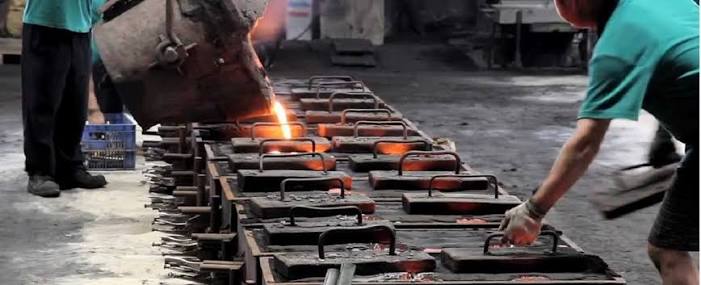
Iron casting is a widely used manufacturing process that supports industries ranging from automotive production and construction to agriculture, mining, and heavy machinery. Its ability to produce complex shapes, durable components, and products in different sizes makes it an important metalworking solution. However, not all iron castings have the same characteristics. Different types of cast iron offer varying levels of strength, hardness, ductility, wear resistance, and machinability.
Understanding these differences is essential when selecting materials for industrial components. An experienced Iron Castings Manufacturer can help identify suitable casting materials and production methods according to specific engineering requirements. By understanding the properties and applications of different iron casting types, manufacturers and industrial buyers can make better decisions about component performance, durability, and production costs.
What Are Iron Castings?
Iron castings are metal components produced by melting iron and pouring the molten material into a prepared mold. Once the metal cools and solidifies, it takes the shape of the mold and can be removed for cleaning, machining, and inspection.
The casting process allows manufacturers to produce components with complex geometries that may be difficult or expensive to create through other manufacturing methods.
Iron castings are commonly used for:
- Industrial machinery and equipment housings.
- Automotive engine and transmission components.
- Construction and agricultural machinery.
- Pipes, valves, and fittings.
- Mining and material-handling equipment.
- Pumps, compressors, and mechanical assemblies.
The final properties of an iron casting depend on its chemical composition, graphite structure, cooling conditions, and any additional heat treatment.
1. Gray Cast Iron
<text weight=”medium” color=”secondary” size=”sm”>Commonly used for machine bases, engine blocks, and industrial housings</text>
<AsyncImage query=”gray cast iron industrial engine block casting close up metal foundry” aspectRatio=”16:9″ width=”100%”/>
Gray cast iron is one of the most commonly used materials in the iron casting industry. It contains graphite in the form of flakes, which gives the material its characteristic gray appearance when fractured.
This graphite structure provides excellent vibration-damping properties and good thermal conductivity. Gray iron also offers relatively good machinability, making it suitable for components that require additional machining after casting.
Key Properties
- Good vibration absorption.
- Excellent machinability.
- High compressive strength.
- Good thermal conductivity.
- Relatively low production cost for many applications.
Industrial Applications
Gray cast iron is widely used in automotive and industrial manufacturing. Typical applications include engine blocks, brake drums, machine tool bases, cylinder heads, pump housings, and compressor components.
Its ability to absorb vibration makes it particularly useful for heavy machinery foundations and equipment structures.
2. Ductile Cast Iron
<text weight=”medium” color=”secondary” size=”sm”>Commonly used for high-strength mechanical components</text>
<AsyncImage query=”ductile cast iron industrial pipe fitting casting metal components” aspectRatio=”16:9″ width=”100%”/>
Ductile cast iron, also known as nodular or spheroidal graphite iron, contains graphite in small spherical shapes rather than flakes. This structure improves its mechanical performance and provides greater tensile strength and ductility than conventional gray cast iron.
The material can withstand higher mechanical stresses and impact loads, making it suitable for applications where toughness and durability are important.
Key Properties
- High tensile strength.
- Good impact resistance.
- Improved ductility.
- Good fatigue resistance.
- Suitable for demanding mechanical applications.
Industrial Applications
Ductile iron is commonly used in automotive crankshafts, gears, suspension components, water pipes, valve bodies, and heavy equipment parts.
It is also widely applied in infrastructure projects because it can provide a useful combination of strength, toughness, and long-term service performance.
3. White Cast Iron
<text weight=”medium” color=”secondary” size=”sm”>Commonly used for abrasive and wear-resistant applications</text>
<AsyncImage query=”white cast iron high chrome industrial wear resistant casting metal part” aspectRatio=”16:9″ width=”100%”/>
White cast iron is characterized by a hard structure in which much of the carbon exists in the form of cementite rather than free graphite. Its fracture surface appears white, which explains its name.
This material offers excellent hardness and abrasion resistance. However, it is relatively brittle compared with gray and ductile cast iron, so it is generally unsuitable for applications involving significant impact or bending forces.
Key Properties
- High hardness.
- Excellent abrasion resistance.
- Strong resistance to surface wear.
- Limited ductility.
- Relatively difficult machining.
Industrial Applications
White cast iron is commonly used in mining, cement production, mineral processing, and material-handling industries.
Typical components include crusher parts, grinding balls, mill liners, wear plates, and industrial equipment exposed to abrasive materials.
4. Malleable Cast Iron
<text weight=”medium” color=”secondary” size=”sm”>Commonly used for fittings, brackets, and mechanical connections</text>
<AsyncImage query=”malleable cast iron pipe fittings mechanical industrial components” aspectRatio=”16:9″ width=”100%”/>
Malleable cast iron is produced by heat-treating white cast iron under controlled conditions. This process changes its internal structure and improves its ductility and toughness.
Compared with ordinary white cast iron, malleable iron is better suited to applications that require resistance to mechanical stress and some degree of deformation without breaking.
Key Properties
- Improved ductility.
- Good toughness.
- Useful mechanical strength.
- Better impact resistance than white cast iron.
- Suitable for relatively small and complex components.
Industrial Applications
Malleable iron is used in pipe fittings, electrical hardware, agricultural equipment, brackets, connectors, and various mechanical assemblies.
Its combination of strength and flexibility makes it useful for components that experience moderate mechanical loading.
5. Compacted Graphite Iron
<text weight=”medium” color=”secondary” size=”sm”>Commonly used for engine and thermal-management components</text>
<AsyncImage query=”compacted graphite iron CGI engine cylinder block industrial casting” aspectRatio=”16:9″ width=”100%”/>
Compacted graphite iron, also called vermicular graphite iron, contains graphite particles with a compacted or worm-like structure. Its properties fall between those of gray cast iron and ductile cast iron in several important respects.
It offers better strength and stiffness than gray iron while maintaining useful thermal conductivity and vibration-damping characteristics.
Key Properties
- Higher strength than conventional gray iron.
- Good thermal conductivity.
- Improved stiffness.
- Useful fatigue resistance.
- Suitable for components exposed to thermal and mechanical stress.
Industrial Applications
Compacted graphite iron is particularly valuable in automotive and engine manufacturing. It is used for diesel engine blocks, cylinder heads, exhaust components, and other parts that experience high temperatures and mechanical loads.
6. Alloy Cast Iron
<text weight=”medium” color=”secondary” size=”sm”>Commonly used in specialized operating environments</text>
<AsyncImage query=”alloy cast iron industrial heat resistant corrosion resistant metal cast components” aspectRatio=”16:9″ width=”100%”/>
Alloy cast iron is produced by adding elements such as nickel, chromium, molybdenum, or copper to modify the properties of conventional cast iron.
The exact characteristics depend on the alloying elements and their concentrations. Some grades are designed for improved wear resistance, while others offer better corrosion resistance, heat resistance, or mechanical strength.
Key Properties
- Adjustable mechanical characteristics.
- Improved wear resistance in selected grades.
- Better resistance to certain corrosive environments.
- Enhanced high-temperature performance in suitable compositions.
- Application-specific material properties.
Industrial Applications
Alloy cast iron is used in chemical processing equipment, industrial furnaces, pumps, valves, mining machinery, and specialized automotive components.
The material is generally selected when conventional cast iron cannot adequately meet the operating requirements.
Comparison of Different Types of Iron Castings
Each iron casting type has its own advantages and limitations. Comparing their characteristics helps manufacturers and engineers identify suitable materials for particular applications.
| Type of iron | Main characteristic | Common applications |
|---|---|---|
| Gray cast iron | Vibration damping and machinability | Engine blocks, machine bases |
| Ductile cast iron | Strength and toughness | Pipes, gears, crankshafts |
| White cast iron | Hardness and abrasion resistance | Crusher parts, mill liners |
| Malleable cast iron | Ductility and impact resistance | Fittings, brackets |
| Compacted graphite iron | Strength and thermal performance | Engine blocks, cylinder heads |
| Alloy cast iron | Modified application-specific properties | Industrial furnaces, specialized machinery |
The most appropriate material depends on component design, operating conditions, mechanical loads, and expected service life.
How Iron Casting Types Support Different Industries
Iron castings are used across a wide range of industrial sectors. Their versatility allows manufacturers to produce components with different performance characteristics according to industry requirements.
Automotive Manufacturing
The automotive industry uses several iron casting types for engine, transmission, braking, and structural components.
Gray cast iron is valued for vibration damping and thermal conductivity, while ductile iron is selected for components that require greater strength and toughness. Compacted graphite iron is also used in certain high-performance engine applications.
Construction and Infrastructure
Construction projects require durable components that can withstand environmental exposure and mechanical loading.
Ductile iron is commonly used in water distribution pipes, valves, and fittings. Gray iron is also used for drainage covers, machine components, and other infrastructure products.
Mining and Mineral Processing
Mining operations involve abrasive materials and demanding equipment conditions. White cast iron and selected alloy cast irons are useful for components that require high resistance to wear.
Typical applications include crusher liners, grinding equipment, and material-processing components.
Agricultural Machinery
Agricultural equipment depends on strong and reliable components to handle continuous workloads.
Gray and ductile cast iron are used in gearbox housings, engine parts, pump bodies, and mechanical supports. Their material characteristics can help meet the requirements of different agricultural machines.
Energy and Power Generation
Power generation facilities use cast iron components in pumps, valves, compressors, and supporting machinery.
The material grade is selected according to operating temperature, pressure, mechanical loading, and environmental conditions.
Factors to Consider When Selecting an Iron Casting Type
Choosing the right iron casting material requires a clear understanding of the component’s intended function. A material that performs well in one application may not be suitable for another.
Several factors should be evaluated before making a selection.
Mechanical Strength
Components exposed to heavy loads or repeated stress may require ductile iron or a suitable alloy grade. Engineers should consider tensile strength, fatigue resistance, and impact requirements.
Wear Resistance
Industrial parts that come into contact with abrasive materials may require white cast iron or specialized alloy cast iron. Selecting an appropriate grade can help extend component service life.
Thermal Performance
Components exposed to heat or frequent temperature changes need materials with suitable thermal properties. Gray and compacted graphite iron are used in applications where thermal conductivity is important.
Machinability
Some cast components require drilling, milling, turning, or other finishing operations. Gray cast iron generally offers good machinability, while certain harder grades require more specialized machining methods.
Operating Environment
Moisture, chemicals, temperature, and exposure to corrosive materials can influence material selection. Engineers should evaluate the actual working environment rather than relying on general material descriptions.
Production Cost
Material costs, casting complexity, machining requirements, and production quantities all affect the overall manufacturing budget. The best choice should balance initial cost with performance and expected service life.
How the Iron Casting Manufacturing Process Influences Material Quality
The properties of an iron casting are determined not only by its chemical composition but also by how it is manufactured.
The production process generally includes several important stages.
- Material preparation: Raw iron and alloying materials are selected according to the required grade.
- Melting: The materials are melted in a suitable furnace under controlled conditions.
- Chemical adjustment: Composition is monitored and modified to achieve the required material characteristics.
- Mold preparation: Patterns and molds are developed according to the component design.
- Pouring: Molten iron is transferred into the mold using an appropriate pouring method.
- Solidification: The metal cools and develops its final internal structure.
- Cleaning and finishing: Excess material is removed, and the casting is cleaned.
- Machining and inspection: Additional processing and testing are performed when required.
Controlling these stages helps reduce defects and improve consistency between production batches.
Common Defects in Iron Castings and Their Prevention
Although iron casting is a well-established manufacturing process, defects can occur if production conditions are not properly controlled.
Some common issues include:
- Porosity: Gas trapped inside the casting can create small cavities. Proper venting, metal treatment, and pouring control help reduce this problem.
- Shrinkage cavities: Insufficient feeding during solidification can create internal voids. Appropriate riser and gating designs help manage shrinkage.
- Cold shuts: Poor metal flow or low pouring temperatures may prevent separate streams of molten metal from joining properly.
- Cracks: Uneven cooling and internal stresses can lead to cracking. Controlled solidification and suitable mold design help minimize the risk.
- Surface defects: Mold conditions and handling problems may create rough surfaces or other imperfections.
Manufacturers use process monitoring, material testing, and inspection procedures to identify and prevent these problems.
Future Developments in Iron Casting Technology
The iron casting industry continues to develop as manufacturers adopt technologies that improve production efficiency and component quality.
Computer-aided design and casting simulation tools allow engineers to study metal flow, cooling patterns, and potential shrinkage before production begins. This helps reduce design errors and unnecessary trial production.
Automation is also improving foundry operations. Automated pouring systems, robotic finishing equipment, and digital monitoring technologies can make production more consistent.
Sustainability is another important development. Energy-efficient furnaces, improved recycling systems, and better waste management practices are helping manufacturers reduce resource consumption.
These developments are creating opportunities to produce more precise and application-specific iron castings while improving manufacturing efficiency.
Conclusion
Different types of iron castings offer distinct properties that make them suitable for a wide range of industrial applications. Gray cast iron provides excellent vibration damping and machinability, ductile iron offers greater strength and toughness, and white cast iron delivers high abrasion resistance. Malleable, compacted graphite, and alloy cast irons provide additional options for specialized engineering requirements.
Understanding these material differences helps businesses and engineers select appropriate components for their equipment and production systems. By considering mechanical properties, operating conditions, machining requirements, and manufacturing quality, industrial buyers can make more informed material decisions.
As casting technology continues to advance, iron castings will remain an important solution for producing durable, functional, and cost-effective components across modern industrial sectors.


