


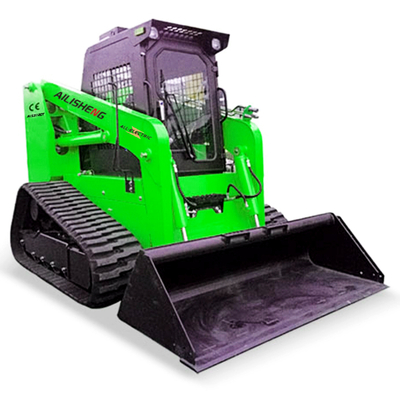
Electric Skid Steer Loaders Supplier for Construction Companies: A Complete Buying Guide
Construction companies are increasingly considering electric skid steer loaders for projects that require compact equipment, efficient material handling, and reduced local emissions. These machines can be useful for indoor construction, renovation, landscaping, demolition support, and work in areas where noise and exhaust emissions need to be minimized. However, selecting the right equipment requires careful evaluation of job-site conditions, machine performance, battery capacity, attachment compatibility, and long-term operating costs.
Choosing a reliable Electric Skid Steer Loaders Supplier is an important part of this process. A qualified supplier should help construction companies identify suitable models, understand technical specifications, verify relevant compliance documentation, and plan for maintenance and after-sales support. This guide explains the key factors contractors should consider before investing in electric skid steer loaders.
Why Construction Companies Are Considering Electric Skid Steer Loaders
Electric skid steer loaders use electric power instead of a conventional diesel or gasoline engine. Their compact design and maneuverability make them suitable for various construction tasks, particularly where space is limited or indoor air quality is a concern.
Several potential advantages make them worth evaluating.
Reduced Local Exhaust Emissions
Electric loaders produce no tailpipe emissions during operation. This can be particularly beneficial for indoor construction, warehouses, underground facilities, and renovation projects where ventilation is limited.
However, overall environmental impact also depends on how the electricity is generated, battery manufacturing, and the equipment’s service life.
Lower Operating Noise
Electric powertrains can reduce engine-related noise compared with many conventional machines. This can improve working conditions in occupied buildings, residential neighborhoods, and other noise-sensitive environments.
Actual noise levels still depend on hydraulic pumps, tires, attachments, warning systems, and the working surface.
Potential Operating Cost Savings
Electric skid steer loaders may have lower energy costs and fewer engine-related maintenance requirements than comparable combustion-powered machines. They do not require engine oil changes, fuel filters, or exhaust-system servicing associated with conventional engines.
Nevertheless, savings depend on electricity prices, annual operating hours, purchase price, battery replacement costs, and maintenance requirements. Contractors should compare total ownership costs rather than assuming every electric model will be cheaper in every situation.
Suitability for Confined Work Areas
Many construction projects involve narrow access points, tight turning spaces, and indoor work zones. A compact electric loader may be useful for transporting materials, moving debris, and handling approved attachments in these environments.
Before purchasing, contractors should verify machine width, height, turning characteristics, operating weight, floor loading limits, and access requirements.
Step 1: Identify Your Construction Applications
The first step is to determine exactly what the machine will do. A loader selected for indoor renovation may have different requirements from one used for earthmoving, site preparation, or heavy material handling.
Common construction applications include:
- Moving sand, gravel, soil, and aggregates
- Transporting construction materials across job sites
- Loading and removing demolition debris
- Handling pallets and packaged materials
- Preparing surfaces for landscaping and paving
- Supporting indoor renovation and facility maintenance
- Operating compatible hydraulic attachments
Create a list of your most frequent tasks and identify the loads, travel distances, ground conditions, and working hours involved.
For example, a contractor working mainly inside commercial buildings may prioritize low noise, compact dimensions, and manageable floor loading. A contractor handling materials outdoors may need stronger traction, suitable ground clearance, and performance appropriate for uneven terrain.
Sharing this information with the supplier makes it easier to compare relevant models rather than evaluating equipment based on general specifications alone.
Step 2: Compare Key Machine Specifications
Once the primary applications are clear, compare the technical specifications of the available machines. Focus on characteristics that directly affect productivity and safety.
| Specification | Why it matters |
|---|---|
| Rated operating capacity | Determines the load the machine can handle within its specified operating limits |
| Tipping load | Helps indicate machine stability limits but should not be treated as a routine working capacity |
| Operating weight | Affects transport requirements, ground pressure, and floor loading |
| Machine dimensions | Determines whether the loader can access doorways, corridors, and restricted areas |
| Lift height and reach | Influences loading into trucks, containers, and material storage areas |
| Travel speed | Affects movement between work zones |
| Hydraulic flow and pressure | Determines compatibility and performance with hydraulic attachments |
| Ground clearance and tires | Influence suitability for different surfaces |
| Battery capacity | Helps establish potential operating duration and energy availability |
| Charging requirements | Determine whether the machine fits the site’s electrical infrastructure and work schedule |
Do not compare machines using a single specification. A loader with a higher rated operating capacity may be too large for a confined work area, while a compact machine may not provide enough lifting performance for your regular tasks.
Ask the supplier to explain how the specifications relate to your planned applications.
Step 3: Evaluate Battery Capacity and Daily Runtime
Battery performance is one of the most important considerations when buying an electric skid steer loader for construction work. If the machine cannot complete the required tasks between charging periods, productivity may suffer.
Ask the supplier for the battery’s rated capacity, usable energy, chemistry, charging requirements, and expected service life. You should also clarify whether the advertised runtime is based on light-duty operation, mixed tasks, or demanding continuous work.
Actual runtime varies according to several factors:
- Load weight and lifting frequency
- Travel distance and terrain
- Hydraulic attachment usage
- Ambient temperature
- Operator habits
- Time spent idling or waiting
- Battery age and condition
For example, a machine repeatedly lifting heavy materials and operating a high-demand attachment will generally consume energy differently from one performing occasional light material handling.
Estimate your typical operating hours and work cycles before deciding which battery configuration is appropriate. If the machine must operate for extended shifts, ask about practical charging intervals, additional charging options, and whether your work schedule requires backup equipment.
Step 4: Check Charging Infrastructure Before Ordering
A suitable electric loader must also be compatible with the construction site’s electrical setup. Charging requirements can affect where the machine is stored, how it is transported between sites, and how work is scheduled.
Ask the supplier to specify:
- Required supply voltage and electrical current
- Charger type and whether it is included
- Expected charging duration
- Supported charging connectors
- Installation requirements
- Any recommended electrical protections
- Charging instructions and safety precautions
Have a qualified electrician verify that the available power supply can support the charging equipment. Do not assume that an ordinary outlet will meet the machine’s requirements.
For construction companies working across multiple locations, consider how charging will be managed at temporary sites. A machine that works well at a permanent facility may be less practical when reliable electrical access is unavailable.
Planning charging arrangements before delivery can prevent delays and help the equipment fit naturally into daily operations.
Step 5: Select the Right Attachments
Attachments determine how effectively a skid steer loader can perform different construction tasks. Choosing compatible tools can increase versatility and reduce the need for additional specialized equipment.
Depending on the machine’s design and approved configuration, useful attachments may include:
- General-purpose buckets: For moving soil, aggregates, and loose materials.
- Pallet forks: For handling palletized building supplies and packaged goods.
- Grapples: For moving irregular debris, branches, and suitable demolition materials.
- Augers: For drilling holes where site conditions and machine specifications permit.
- Sweepers: For cleaning paved work areas and facility floors.
- Other hydraulic attachments: For specialized tasks supported by the machine’s hydraulic system.
Before ordering an attachment, verify its mounting interface, hydraulic flow and pressure requirements, weight, and operating limitations. Confirm whether additional electrical connections or other accessories are necessary.
The attachment’s weight and operating characteristics can affect the machine’s rated capacity and stability. Always follow the manufacturer’s instructions and avoid using tools that exceed the machine’s approved limits.
If your company expects its projects to change over time, discuss future attachment needs with the supplier before selecting a model.
Step 6: Assess Build Quality and Safety Features
Construction equipment must withstand regular use in demanding conditions. Buyers should evaluate the machine’s structural design, component quality, operator controls, and safety systems before committing to a purchase.
Important areas to examine include the chassis, lift arms, attachment mounting points, hydraulic hoses, electrical connections, battery protection, and access steps.
Also ask the supplier about the following:
- Operator restraint and protective structures, where applicable
- Visibility and control layout
- Emergency stopping or shutdown procedures
- Warning indicators and alarms
- Safety interlocks
- Braking and parking functions
- Battery charging and electrical safety instructions
- Maintenance access and inspection procedures
Request the operator manual and relevant safety documentation before delivery. If possible, arrange a demonstration or inspect the machine in person.
For construction companies operating on multiple job sites, establish consistent operator training and inspection procedures. A well-specified machine still requires appropriate training, proper maintenance, and adherence to its operating limits.
Step 7: Understand the Total Cost of Ownership
Purchase price is important, but it does not tell the full financial story. Contractors should estimate the total cost of owning and operating an electric skid steer loader over a realistic period.
The calculation should include the initial purchase, charging equipment, energy consumption, scheduled maintenance, wear parts, transportation, financing, and potential battery replacement.
A basic ownership-cost framework is:
Total ownership cost = Purchase and setup costs + Energy costs + Maintenance and repairs + Battery-related costs + Other operating expenses
To estimate electricity expenses, multiply the energy consumed over the evaluation period by your applicable electricity rate. Use realistic operating data rather than assuming the battery consumes its full rated capacity during every charging cycle.
For a fair comparison with a diesel machine, include fuel, engine maintenance, exhaust-system servicing where applicable, and differences in acquisition cost and productivity.
A machine with a higher initial price may offer better long-term value if it matches the workload, reduces operating expenses, and receives dependable technical support. However, the result should be established through calculations using your own conditions.
Step 8: Evaluate the Supplier’s Warranty and After-Sales Support
A supplier’s responsibilities should not end when the machine is delivered. Reliable after-sales support can help construction companies minimize downtime, maintain safety, and manage repair expenses.
Before purchasing, ask for written details about warranty coverage for the machine, battery, electric motor, controller, charger, and hydraulic components. Different components may have different coverage periods and exclusions.
You should also establish how warranty claims are submitted, which repair costs are covered, and whether service can be provided locally.
Consider these questions:
- What is the warranty period for the complete machine and its major components?
- Are there operating-hour limits or mandatory maintenance conditions?
- Which spare parts are normally available from stock?
- What are the expected delivery times for replacement components?
- Is remote troubleshooting available?
- Can trained technicians provide local or on-site support?
- Are operator training and maintenance documentation included?
For imported equipment, confirm the process for obtaining warranty service in your country. Clarify who handles transportation, parts shipment, and communication with the manufacturer.
Strong support arrangements are particularly important for contractors whose project schedules leave little room for unexpected downtime.
Step 9: Verify Certifications and Compliance Requirements
Certification and compliance requirements vary by destination market, machine configuration, and intended application. Before ordering, identify the regulations that apply to the equipment where it will be operated.
Ask the supplier for relevant declarations of conformity, test reports, safety documentation, and information about applicable standards.
Depending on the product and destination, documentation may relate to machinery safety, electrical safety, electromagnetic compatibility, battery systems, or quality management.
Keep in mind that different documents serve different purposes. For example, ISO 9001 concerns an organization’s quality management system; it does not independently prove that an individual loader meets every applicable safety requirement. Where CE marking is relevant, request the appropriate declaration of conformity and supporting documentation required under applicable European Union legislation.
Verify that documents apply to the actual manufacturer, model, and configuration being purchased. If the machine is imported, check local import requirements and any applicable registration, inspection, or workplace safety obligations.
Resolving these issues before shipment can reduce the risk of delays, additional expenses, or problems putting the machine into service.
Step 10: Compare Suppliers Using a Consistent Checklist
Construction companies should compare suppliers against the same criteria. This makes it easier to identify the strongest overall offer rather than focusing on the lowest quotation.
| Evaluation factor | Questions to consider |
|---|---|
| Application suitability | Does the supplier understand your job-site conditions and workload? |
| Machine specifications | Are capacity, dimensions, lifting performance, and hydraulics appropriate? |
| Battery and charging | Are runtime assumptions and charging requirements clearly documented? |
| Attachments | Are your required tools compatible with the selected model? |
| Product quality | Are inspection procedures and technical records available? |
| Compliance | Are the relevant documents valid and appropriate for your market? |
| Warranty | Are coverage and exclusions provided in writing? |
| Spare parts | Can essential components be obtained within practical time frames? |
| Technical support | Is qualified assistance available when required? |
| Commercial terms | Are delivery dates, payment conditions, and included accessories clear? |
Ask each supplier to provide a complete quotation with a detailed specification sheet. This helps ensure that you are comparing equivalent machine configurations and not overlooking differences in included equipment or support.
For larger orders, consider requesting a demonstration, a sample inspection report, or references from customers using comparable machines.
Common Buying Mistakes Construction Companies Should Avoid
Even experienced contractors can make purchasing decisions that create unnecessary costs. Avoid these common mistakes when evaluating electric skid steer loaders.
Choosing by price alone: A low purchase price may conceal higher maintenance costs, limited support, or unsuitable specifications.
Underestimating energy requirements: Failing to account for demanding attachments, heavy loads, and charging breaks can disrupt daily schedules.
Ignoring job-site access: Machine dimensions, transport weight, doorway clearance, and floor loading can determine whether the equipment is practical for a project.
Overlooking attachment compatibility: An attachment that cannot operate within the machine’s hydraulic or capacity limits may be ineffective or unsafe.
Accepting vague warranty promises: Verbal assurances are difficult to enforce. Obtain written terms before making a payment.
Skipping compliance checks: Verify the documentation and regulations relevant to the machine’s intended market before arranging delivery.
Neglecting operator training: Ensure that operators understand the controls, charging procedures, attachment limits, inspection requirements, and safe operating practices.
Avoiding these mistakes can help protect your investment and improve equipment utilization across projects.
Final Thoughts
Buying an electric skid steer loader is a significant decision for construction companies, and the right choice depends on more than the advertised price or battery capacity. Contractors should begin with their actual job-site requirements, compare machine specifications, assess charging infrastructure, verify attachment compatibility, and calculate realistic ownership costs.
The supplier also plays a critical role. Look for clear technical information, verifiable compliance documents, written warranty terms, accessible spare parts, and practical after-sales support. These factors can influence equipment reliability and productivity throughout its working life.
By following a structured buying process and comparing suppliers consistently, construction companies can select an electric skid steer loader that meets their operational needs, supports safe working practices, and provides long-term value.


