


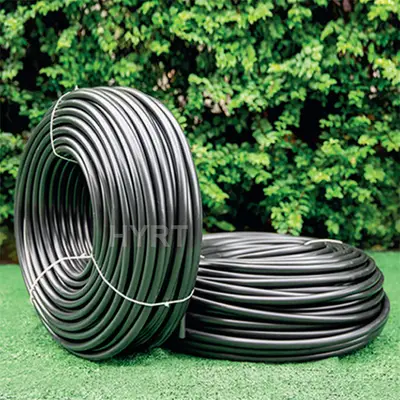
Choosing irrigation pipes is an important investment for farms, agricultural projects, and commercial growing operations. Although the initial purchase price often influences buying decisions, the true value of an irrigation pipe depends on how well it performs over time. Durability, material quality, maintenance requirements, water distribution efficiency, and compatibility with irrigation equipment all contribute to the overall cost of ownership.
Working with a reliable Irrigation Pipe Manufacturer can help buyers understand product specifications and identify options suited to their operational needs. However, assessing long-term value requires more than comparing supplier quotations. Buyers should evaluate the expected service life, installation costs, operating conditions, and potential expenses associated with repairs or replacement.
Why Long-Term Value Matters When Buying Irrigation Pipes
Irrigation pipes are often installed across extensive agricultural areas, making replacement or repair a potentially time-consuming and expensive process. A product with a lower purchase price may become more costly over time if it requires frequent maintenance or fails prematurely.
Long-term value considers the relationship between the initial investment and the benefits a product provides throughout its service life. This includes reliable water delivery, reduced downtime, manageable maintenance costs, and compatibility with the rest of the irrigation system.
For farms operating on tight budgets, understanding these factors can help prevent unnecessary expenses and support more predictable maintenance planning.
The objective is not necessarily to purchase the most expensive pipe available. It is to select a product that delivers suitable performance and reliability at a reasonable total cost.
Evaluate Material Quality and Durability
Material quality is one of the primary factors affecting irrigation pipe performance. PVC and high-density polyethylene (HDPE) are commonly used in agricultural irrigation, but their properties and installation requirements differ.
PVC pipes are rigid and may be suitable for fixed distribution networks where dimensional stability is important. HDPE pipes are flexible and can be useful for installations involving uneven terrain or changing pipe routes.
Regardless of material, buyers should examine the product’s specifications, manufacturing consistency, and suitability for the intended environment. Poorly matched materials or inconsistent production quality can increase the risk of leaks, damage, and early replacement.
Durability should also be assessed in relation to actual operating conditions. Exposure to sunlight, temperature changes, soil movement, physical impacts, and internal pressure can influence service life.
A product’s material designation alone does not guarantee long-term performance. Its quality and application suitability matter just as much.
Compare Initial Price With Total Cost of Ownership
Purchase price is only one component of the overall investment in an irrigation pipe system. Installation, transportation, fittings, maintenance, repairs, and eventual replacement can add substantially to the total cost.
A practical assessment should consider the following expenses:
- Purchase cost: The price of pipes and any required accessories.
- Transportation: Delivery charges, handling, and storage requirements.
- Installation: Labor, trenching, connections, and equipment.
- Maintenance: Routine inspections, repairs, and replacement fittings.
- Operational losses: Potential costs associated with leaks, downtime, or inadequate water delivery.
- Replacement: Future expenses if pipes deteriorate or become unsuitable for the system.
Comparing these factors provides a more realistic picture of product value than examining the unit price alone.
For example, a pipe with a moderately higher purchase price may offer better value if it reduces repair frequency and performs reliably under the required operating conditions. This outcome should be supported by product specifications and credible performance information rather than assumptions.
Check Pressure Ratings and Flow Requirements
Pressure performance is essential when evaluating irrigation pipes for long-term use. Pipes must withstand the system’s expected operating pressure and account for relevant pressure surges caused by pump starts, valve closures, or other operating changes.
A pipe with an unsuitable pressure rating may be exposed to excessive stress, increasing the risk of leaks or failure. Buyers should therefore check the rated pressure, pipe dimensions, material specifications, and relevant operating conditions before making a selection.
Flow capacity also influences system performance. Pipe diameter, internal surface characteristics, water velocity, and network layout affect friction losses and the pressure available at downstream outlets.
If a pipe is too small for the required flow, the system may need more pumping energy to achieve the intended delivery conditions. Correct sizing can help avoid unnecessary pressure losses and support efficient distribution.
Pressure and flow requirements should be established through appropriate hydraulic design rather than estimated from pipe appearance or price.
Assess Compatibility With the Existing Irrigation System
A pipe may be durable and competitively priced but still provide poor value if it does not fit the existing irrigation network. Compatibility affects installation efficiency, system reliability, and future maintenance.
Before purchasing, buyers should verify that pipe dimensions, connection types, fittings, valves, and other components are suitable for one another. They should also consider whether the pipe is compatible with the intended pumping, filtration, sprinkler, or drip irrigation equipment.
For expansion projects, matching new products with the existing system can reduce the need for additional adapters or extensive modifications.
Standardized dimensions and clear technical documentation can make replacement and maintenance easier. Confirming these details before ordering helps prevent delays and unexpected installation expenses.
Consider Expected Service Life
Expected service life is an important measure of long-term value, but it should be assessed carefully. Actual lifespan depends on product quality, operating pressure, installation practices, environmental exposure, maintenance, and water conditions.
Buyers should avoid relying on broad claims that a pipe will last for a specific number of years without supporting evidence. Instead, they should request relevant product information, installation guidance, warranty terms, and any available performance or testing documentation.
A pipe designed for one operating environment may not achieve the same service life in another. For instance, prolonged outdoor exposure may require different considerations from a properly protected underground installation.
Understanding the expected service conditions helps buyers choose products that are more likely to deliver reliable performance throughout the planned operating period.
Review Manufacturing Standards and Quality Control
Consistent manufacturing quality can reduce uncertainty when purchasing irrigation pipes. Variations in wall thickness, diameter, material properties, or connection dimensions may create installation problems and affect system performance.
Buyers should check whether the product complies with the standards and technical requirements applicable to the intended use. Depending on the product and market, useful documentation may include dimensional specifications, pressure ratings, material information, and relevant test records.
Quality-control procedures can include visual inspections, dimensional measurements, material verification, and pressure testing where appropriate.
For large agricultural projects, consistency across production batches is especially important because numerous pipe sections must connect and operate together. Clear specifications and traceable product information can simplify purchasing, installation, and future replacement.
Consider Maintenance Requirements
Maintenance affects both the cost and reliability of an irrigation pipe system. Some installations require regular inspection of exposed pipes and connections, while buried networks may need scheduled checks for leaks, pressure changes, or signs of ground disturbance.
Before choosing a product, buyers should understand the maintenance practices recommended for its material and installation environment.
Useful considerations include:
- Accessibility of pipe connections and valves.
- Availability of compatible fittings and replacement sections.
- Resistance to the expected environmental conditions.
- Ease of identifying and repairing leaks.
- Requirements for cleaning or flushing the system.
- Manufacturer guidance for storage, installation, and operation.
Preventive maintenance can help identify small issues before they cause larger failures. Even a well-manufactured pipe can perform poorly if installed incorrectly or operated outside its specified limits.
Measure the Impact on Water and Energy Efficiency
Long-term value also includes how effectively the pipe supports water delivery. Leaks can waste water, while excessive friction losses may increase the energy required to move water through the network.
A correctly sized, properly installed pipe system can help maintain the flow and pressure needed by sprinklers, drip lines, and other irrigation components. Consistent connections and suitable pressure ratings further support reliable operation.
However, overall efficiency depends on the complete system. Pump selection, filtration, valve operation, irrigation scheduling, and maintenance all influence water and energy consumption.
When comparing products, buyers should therefore evaluate pipe performance as part of the wider irrigation design. A pipe that meets the system’s hydraulic requirements can help avoid avoidable operating costs, although actual savings depend on site conditions and system performance.
Compare Supplier Support and Product Documentation
The supplier relationship can influence the long-term value of an irrigation pipe purchase. Clear technical guidance helps buyers select appropriate products and understand the conditions under which they should be installed and operated.
Before placing an order, consider whether the supplier can provide:
- Complete product specifications.
- Guidance on suitable applications and pressure requirements.
- Information about compatible fittings and accessories.
- Available quality certificates or test documentation.
- Clear warranty conditions and product limitations.
- Reliable access to replacement products when needed.
Technical support is particularly valuable for larger installations or projects with complex operating requirements. Buyers should also confirm delivery schedules, product availability, and procedures for addressing quality concerns.
Comparing suppliers on these factors can reveal meaningful differences that are not reflected in the quoted price.
Calculate Long-Term Value With a Practical Comparison
A structured comparison can help buyers assess competing pipe products more consistently. Begin by identifying the expected period of use and estimating the costs associated with purchasing, installation, maintenance, repairs, and replacement.
For a simple annualized comparison, divide the estimated total ownership cost over the evaluation period by the number of years in that period:
Average annual ownership cost = Total estimated ownership cost ÷ Evaluation period in years
For example, if a pipe installation has an estimated total ownership cost of $12,000 over ten years, its simple average annual cost is $1,200.
This calculation is useful for initial comparisons, but it does not account for the timing of expenses, inflation, financing costs, or the time value of money. A more detailed financial assessment may be appropriate for large projects.
Buyers should also consider nonfinancial factors, including reliability, water delivery requirements, installation constraints, and the consequences of unexpected downtime. The lowest annualized cost is not automatically the best choice if the product does not meet operational requirements.
Common Mistakes to Avoid When Evaluating Pipe Value
Several purchasing mistakes can lead to unnecessary expenses over the life of an irrigation system.
Choosing based on price alone: A low upfront cost does not necessarily indicate lower long-term expense.
Ignoring pressure requirements: Pipes that cannot withstand the system’s operating conditions may fail prematurely.
Overlooking installation quality: Incorrect connections, inadequate support, or unsuitable burial practices can reduce product life.
Assuming all materials perform identically: PVC and HDPE have different properties, and product specifications vary even within the same material category.
Accepting unsupported durability claims: Service-life estimates should be evaluated against documented specifications and actual operating conditions.
Neglecting future maintenance: The availability of fittings, replacement sections, and technical guidance can affect repair costs and downtime.
Avoiding these mistakes helps buyers focus on practical performance and total ownership cost instead of relying on a single purchasing factor.
Conclusion
Assessing the long-term value of irrigation pipe products requires a balanced evaluation of material quality, pressure performance, flow capacity, durability, maintenance, compatibility, and total ownership cost. The right product should meet the technical requirements of the irrigation system while offering dependable performance throughout its expected service life.
Buyers can make more informed decisions by reviewing specifications, checking relevant quality documentation, comparing installation and maintenance expenses, and considering the support available from suppliers. A careful assessment helps agricultural businesses reduce avoidable costs, improve water distribution reliability, and make better use of their irrigation infrastructure investment.


