


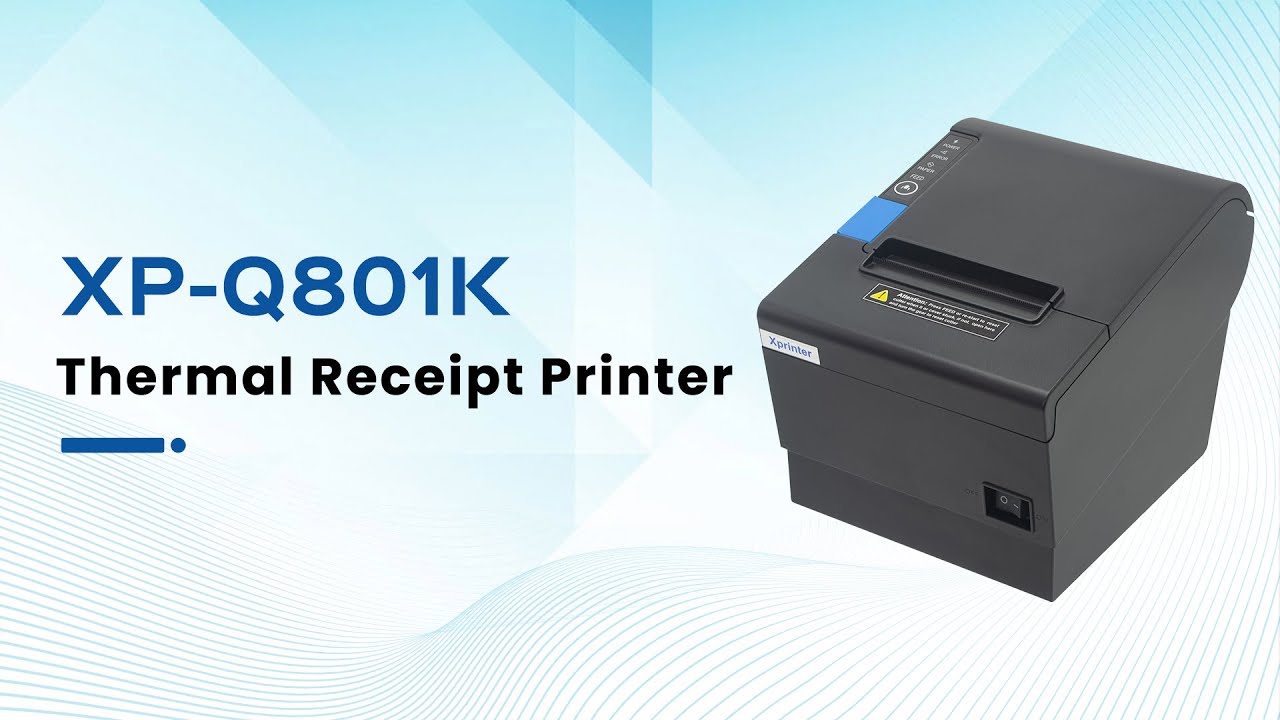
Choosing the right receipt printer can have a direct impact on checkout efficiency, customer service, and everyday business operations. Retail stores, restaurants, cafés, supermarkets, and service providers all have different printing requirements, so selecting a model based solely on price may not deliver the best long-term value.
An 80mm Thermal Printer can be a practical choice for businesses that need fast, readable receipts and a wider printing format. Before purchasing one, however, it is important to consider factors such as printing speed, connectivity, POS compatibility, durability, paper requirements, and maintenance needs.
What Is an 80mm Thermal Printer?
An 80mm thermal printer is designed to print receipts on thermal paper with a nominal width of 80 millimeters. Instead of using ink or toner, direct thermal models use a heated print head to create images and text on heat-sensitive paper.
This technology is widely used for transaction receipts because it supports quick printing and generally requires fewer consumable components than conventional printers.
Consider Your Printing Volume
The number of receipts your business produces each day should influence your choice. A small shop with limited transactions may not need the same performance level as a busy supermarket or restaurant.
Estimate both average and peak transaction volumes. A printer that handles your busiest periods comfortably can help prevent queues and reduce pressure on employees.
Compare Printing Speed
Print speed is commonly measured in millimeters per second. A faster printer can be particularly useful in high-volume environments where customers expect quick service.
However, maximum speed is only one part of overall performance. Receipt length, graphics, barcodes, connection type, and POS software can all influence how quickly a completed receipt is produced.
Choose a speed that matches your actual workload rather than automatically selecting the fastest available model.
Check Print Quality and Resolution
Clear printing is essential when receipts contain small text, product information, barcodes, logos, or QR codes. Resolution is generally expressed in dots per inch (DPI).
Businesses that print primarily text-based receipts may not require the highest resolution. Those producing detailed graphics or machine-readable codes should pay closer attention to print clarity and resolution.
Evaluate Connectivity Options
A printer needs to communicate reliably with your POS system, computer, tablet, or other business equipment. Different models offer different connection methods.
Common options include:
- USB: Suitable for direct connections to computers and POS terminals.
- Ethernet: Useful for networked checkout environments.
- Bluetooth: Convenient for compatible mobile POS systems.
- Serial: Still relevant for some specialized or legacy equipment.
Choose a connection that fits your current setup and consider whether your business may need additional flexibility in the future.
Verify POS and Software Compatibility
Compatibility should be confirmed before purchasing. A printer that cannot communicate properly with your POS software can create unnecessary installation and operational problems.
Check supported operating systems, printer drivers, communication protocols, and POS applications. If your business uses specialized software, verify compatibility with the exact printer model rather than assuming that all thermal printers work in the same way.
Think About Counter Space
The physical size of the printer matters, especially when checkout counters have limited space. Measure the available area before making a purchase.
Also consider where cables will be positioned and whether employees can easily access the paper compartment. A compact printer is useful only if it can be positioned safely and conveniently within the working environment.
Look at Paper Handling Features
Easy paper replacement can save time during busy periods. Many thermal printers use drop-in paper loading, allowing employees to replace rolls quickly.
An automatic cutter can also be valuable in high-volume environments because it separates receipts after printing. However, businesses with lower transaction volumes may not consider this feature essential.
Always confirm the supported paper dimensions and specifications before purchasing replacement rolls.
Consider Durability and Build Quality
A printer used continuously throughout the day should be capable of handling its expected workload. Look at the manufacturer’s recommended duty cycle and operating conditions.
Build quality, print-head durability, cutter reliability, and paper-feed performance can all influence the equipment’s useful life. A slightly higher initial investment may be worthwhile if it provides more dependable long-term operation.
Calculate the Total Cost
The purchase price is only one part of the cost of owning a thermal printer. Businesses should also consider ongoing expenses and potential maintenance requirements.
Important factors include:
- Thermal paper costs
- Replacement parts
- Maintenance requirements
- Warranty coverage
- Technical support
- Expected service life
- Potential downtime
Comparing these factors provides a more realistic picture of the printer’s overall value.
Consider the Operating Environment
The location where the printer will be used can affect its performance. A dusty kitchen, busy retail counter, or warm warehouse may place different demands on equipment.
Avoid exposing the printer to excessive heat, moisture, dust, or direct sunlight. If the device will operate in a demanding environment, check that its specifications are suitable for those conditions.
Ease of Maintenance
Thermal printers generally require less routine maintenance than ink-based printers, but they are not maintenance-free. Paper dust and debris can accumulate around the print head and paper path.
Look for a design that makes routine cleaning, paper replacement, and basic troubleshooting straightforward. Easy maintenance can reduce downtime and make it simpler for employees to keep the printer operating properly.
Do Not Ignore Warranty and Support
Technical support can become particularly important when a printer is used as part of a critical checkout system. Before buying, review the warranty period and determine what types of repairs or replacements are covered.
It is also useful to check whether documentation, drivers, troubleshooting resources, and replacement components are readily available.
Match Features to Your Business
More features do not necessarily mean a better purchase. Businesses should focus on specifications that solve genuine operational requirements.
For example, a small retail store may prioritize affordability and reliable USB connectivity, while a busy restaurant may value fast printing, an automatic cutter, and network connectivity.
Creating a short list of essential requirements before comparing models can make the buying process more straightforward.
Final Checklist Before Buying
Before placing an order, review the following points:
- Does the printer support your required paper format?
- Is its printing speed suitable for your transaction volume?
- Does the resolution meet your receipt design requirements?
- Is it compatible with your POS system and operating system?
- Does it provide the connectivity your business needs?
- Is the printer suitable for its intended environment?
- Are paper and replacement components readily available?
- Does the warranty provide adequate coverage?
Answering these questions can help you avoid compatibility issues and unnecessary expenses.
Conclusion
An 80mm thermal printer can provide an efficient receipt-printing solution for many types of businesses, but the right model depends on more than paper width. Printing volume, speed, resolution, connectivity, POS compatibility, durability, maintenance, and total ownership costs should all be considered before making a decision.
By focusing on your actual business requirements rather than choosing based on specifications alone, you can select a printer that supports efficient transactions, produces consistent receipts, and provides practical long-term value.


