


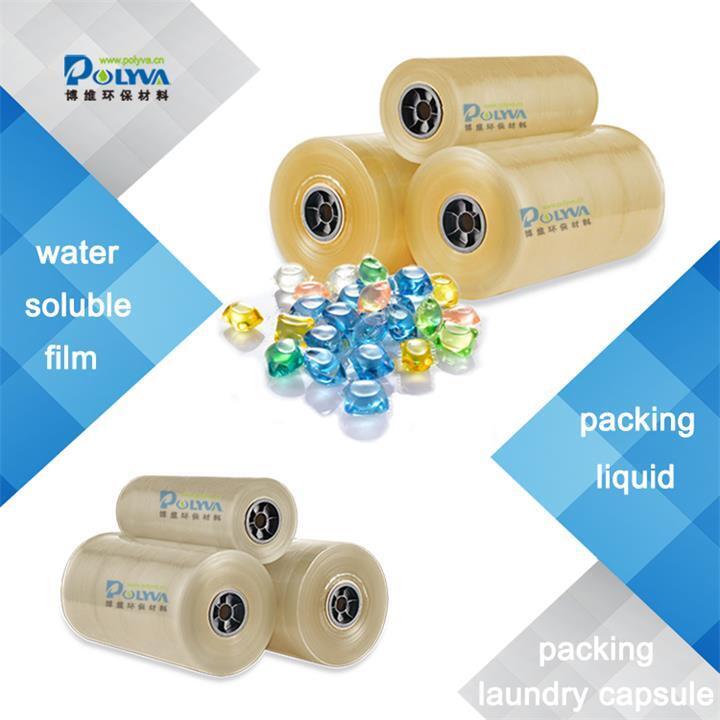
The performance of automated packaging equipment depends on the interaction between machinery, packaging materials, product characteristics, and operating conditions. Even a well-designed production line can experience inconsistent results when one of these factors is not properly controlled.
Manufacturers using Water Soluble Film Equipment should therefore evaluate the entire packaging process rather than focusing on a single machine specification. Film quality, product formulation, machine settings, maintenance, and environmental conditions can all influence production results.
Film Quality and Compatibility
The characteristics of the water-soluble film have a direct effect on machine performance. Film thickness, mechanical strength, dissolution behavior, and surface properties can vary between materials.
The equipment should be configured for the selected film specification. Using material outside the machine’s intended operating range may lead to feeding, forming, or sealing difficulties.
Film Storage Conditions
Water-soluble film can be sensitive to environmental exposure, particularly moisture. Improper storage may change the way the film unwinds, forms, or seals.
Film should be stored according to the supplier’s recommended temperature and humidity conditions. Rolls should also be protected from contamination, physical damage, and unnecessary exposure during handling.
Product Formulation
The physical properties of the product being packaged can significantly affect machine performance. Liquids, powders, granules, gels, and viscous formulations may require different filling technologies.
Important characteristics include viscosity, density, particle size, flowability, and moisture content. Changes in formulation can require adjustments to dosing and filling parameters.
Filling Accuracy
Consistent dosing is essential for producing uniform pouches. Variations in fill quantity can affect product quality and may also influence the sealing process.
Filling systems should be selected and adjusted according to the product’s characteristics. Regular calibration and inspection can help maintain dosing consistency over time.
Machine Speed
Production speed influences how long the film and product remain within different processing stages. Increasing speed may change filling behavior, sealing time, and film movement.
Manufacturers should evaluate actual production output rather than relying only on the machine’s maximum rated speed. Practical capacity should account for changeovers, cleaning, adjustments, and quality checks.
Pouch Size and Design
Pouch dimensions affect film consumption, filling volume, forming requirements, and machine cycle time. Larger or more complex pouch designs may require different equipment settings.
Before production, the desired pouch format should be clearly defined. Machine parameters should then be established and tested for that specific design.
Sealing Parameters
Sealing quality depends on several interacting factors. Temperature, pressure, dwell time, film characteristics, and machine speed can all influence the final seal.
A change in one parameter may require adjustments elsewhere in the process. Sealing settings should be validated using the intended film and product rather than selected solely through general assumptions.
Film Tension and Tracking
Stable film movement is essential for consistent pouch formation. Incorrect tension can cause wrinkles, stretching, or unstable film advancement.
Tracking problems can also shift the film away from its intended position. Rollers, guides, sensors, and tension mechanisms should be maintained and correctly aligned.
Temperature and Humidity
The production environment can affect both the film and the packaging process. Changes in temperature and humidity may influence film handling and other material characteristics.
Maintaining suitable environmental conditions can help make production more predictable. Storage and operating requirements should be established based on the specific film being used.
Machine Maintenance
Mechanical wear and contamination can gradually reduce equipment performance. Rollers, filling components, sealing surfaces, cutting mechanisms, sensors, and other parts require regular inspection.
Preventive maintenance can help identify problems before they lead to repeated production defects or unexpected downtime.
Sensor Accuracy
Sensors provide feedback for many automated machine functions. They may monitor film position, pouch location, filling operations, temperature, or other process conditions.
A dirty, damaged, or incorrectly positioned sensor can produce inaccurate signals. Routine cleaning and inspection can help maintain reliable machine control.
Control-System Settings
Modern packaging machines rely on control systems to coordinate multiple operations. Incorrect parameters can affect film feeding, filling, sealing, and cutting.
Operators should use documented and validated settings for established products. Changes should be controlled and recorded so that successful configurations can be reproduced.
Compressed Air Supply
Pneumatic components may be used for various machine movements. Insufficient air pressure, leaks, or unstable supply can affect actuator performance.
The compressed-air system should meet the machine’s specified requirements. Hoses, fittings, valves, and other pneumatic components should be inspected as part of routine maintenance.
Electrical Supply
Stable electrical power is also important for automated packaging equipment. Voltage fluctuations or electrical faults can interfere with controls, motors, heating systems, and sensors.
The facility should provide the electrical supply specified for the equipment. Electrical inspections and repairs should be handled by qualified personnel.
Operator Training
Machine performance is influenced by how the equipment is operated. Operators should understand film loading, product filling, parameter settings, cleaning, routine inspections, and alarm procedures.
Proper training can reduce avoidable operating errors and help staff recognize abnormal machine behavior at an early stage.
Changeover Frequency
Frequent product or pouch changes can affect overall production efficiency. Each changeover may require cleaning, film replacement, tooling adjustments, and parameter changes.
Manufacturers should consider changeover time when calculating practical production capacity. Equipment with suitable adjustment and parameter-management features can simplify repeated format changes.
Product Contamination
Product residue near forming or sealing areas can affect machine performance. In particular, contamination on sealing surfaces may interfere with proper package closure.
Maintaining clean product-contact and sealing areas is therefore essential. Cleaning procedures should be adapted to the formulation and machine design.
Maintenance and Spare Parts
The availability of suitable replacement parts can affect how quickly equipment problems are resolved. Wear components should be identified in advance and monitored according to their expected service requirements.
Maintaining an appropriate inventory of critical spare parts can help reduce extended production interruptions.
Production Planning
Production scheduling can also influence equipment performance. Continuous operation without sufficient cleaning or planned maintenance may increase wear and contamination.
Including inspection, cleaning, and servicing periods in the production schedule can help maintain equipment condition while supporting consistent output.
POLYVA provides water-soluble film packaging solutions for different industrial applications, with equipment configurations selected according to film, product, pouch, and production requirements.
How to Improve Equipment Performance
Manufacturers can support stable operation by combining several practices:
- Use compatible film and properly stored materials.
- Match filling technology to the product formulation.
- Establish validated machine parameters.
- Monitor film tension and positioning.
- Maintain appropriate environmental conditions.
- Perform preventive maintenance.
- Train operators thoroughly.
- Track production and quality data.
- Keep essential spare parts available.
- Investigate recurring problems at their source.
These measures address both immediate machine performance and longer-term production reliability.
Conclusion
Water-soluble film packaging performance is influenced by many interconnected factors. Film properties, product formulation, filling accuracy, machine speed, sealing parameters, environmental conditions, maintenance, sensors, utilities, and operator practices can all affect production results.
A systematic approach helps manufacturers identify which factors require attention and how they interact with one another. By maintaining suitable materials, validated settings, proper machine condition, and controlled operating conditions, production teams can support more consistent and reliable packaging performance.


