


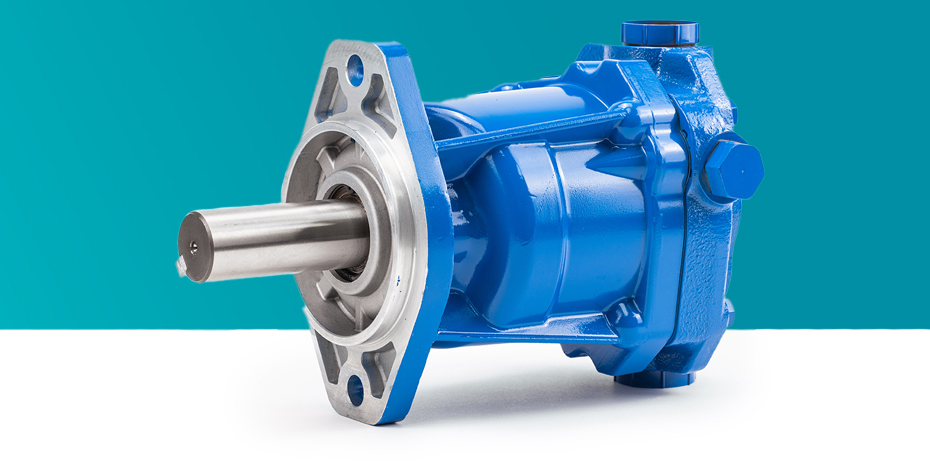
Selecting the right hydraulic motor supplier is an important decision for equipment manufacturers, distributors, and industrial maintenance teams. The chosen motor must meet the machine’s performance requirements while offering suitable reliability, serviceability, and long-term value.
A hydraulic motor manufacturer should therefore be evaluated on more than price or product availability. Buyers need to consider technical expertise, manufacturing capabilities, quality control, delivery performance, documentation, and after-sales support before making a purchasing decision.
Start With the Application Requirements
The first step is to define exactly how the hydraulic motor will be used. A clear understanding of the application makes it easier to identify suitable motor types and specifications.
Important operating factors include pressure, hydraulic flow, required torque, rotational speed, duty cycle, operating temperature, and environmental conditions.
Determine Required Torque
Torque is one of the most important specifications when selecting a hydraulic motor. It determines the motor’s ability to rotate the connected load.
Buyers should consider both continuous and peak torque requirements. Heavy equipment may require substantial starting torque even when the normal operating load is relatively moderate.
Choosing a motor based only on continuous torque can result in inadequate performance during startup or sudden load increases.
Determine Required Speed
Motor speed is typically expressed in revolutions per minute. The required speed depends on the driven equipment and the desired output.
Hydraulic flow and motor displacement have a strong influence on speed. Buyers should identify the normal operating speed as well as any minimum and maximum speeds required by the application.
Evaluate Motor Displacement
Displacement describes the volume of hydraulic fluid associated with one revolution of the motor.
A larger displacement generally provides greater torque at a given pressure while requiring more flow for the same rotational speed. Smaller displacement can support higher speeds when sufficient hydraulic flow is available.
Understanding this relationship helps buyers compare motors with different configurations.
Check Pressure and Flow Requirements
The motor’s pressure and flow ratings must be compatible with the hydraulic system.
Buyers should distinguish between continuous operating pressure and short-term peak pressure. Operating a motor continuously near or above its limits can accelerate wear and reduce service life.
Available pump flow should also be compared with the motor’s recommended operating range.
Choose the Appropriate Motor Type
Different hydraulic motor designs offer different combinations of performance, efficiency, size, and cost.
Gear Motors
Gear motors generally have a straightforward construction and can be suitable for many applications requiring reliable rotary power.
They are often considered where simplicity and practical operating performance are important.
Vane Motors
Vane motors use a rotor and movable vanes to generate rotary movement. They can provide useful speed and torque characteristics for suitable applications.
Their performance depends on factors such as pressure, speed, internal clearances, and sealing.
Piston Motors
Piston motors are available in several configurations and are commonly considered for demanding applications requiring high pressure, torque, or efficiency.
Their more complex construction can provide strong performance but may also require more specialized engineering and maintenance.
Evaluate Manufacturing Quality
The quality of the finished motor depends heavily on manufacturing accuracy. Critical components must be produced within appropriate dimensional tolerances.
Ask potential suppliers how they control machining, surface finishes, internal clearances, assembly, and sealing.
Consistent manufacturing is especially important for buyers placing repeat orders because performance should remain stable between production batches.
Review Testing Procedures
Testing can provide evidence that a motor meets its specified performance requirements.
Depending on the product, relevant testing may include:
- Pressure testing
- Leakage testing
- Speed testing
- Torque testing
- Efficiency testing
- Temperature monitoring
- Endurance testing
- Noise and vibration evaluation
Ask whether test results are documented and whether testing conditions are clearly defined.
Examine Quality Certifications
Certifications can provide useful information about a manufacturer’s quality-management practices, but they should be evaluated carefully.
Buyers should verify the certification body, validity period, scope, and manufacturing location covered by the certificate.
A quality-management certification should not be treated as a substitute for product-specific testing or technical evaluation.
Assess Technical Expertise
A capable supplier should be able to discuss the relationship between pressure, flow, displacement, torque, and speed.
The manufacturer should also ask questions about the actual application before recommending a motor.
Technical expertise becomes especially important when the application involves unusual loads, variable speeds, high pressures, limited installation space, or demanding environmental conditions.
Consider Customization Capabilities
Some machines require motor configurations that are not available as standard products.
Potential customization may involve shaft dimensions, mounting arrangements, ports, displacement, sealing materials, or other specifications.
If customization is required, ask how the manufacturer manages engineering review, design approval, prototype testing, and production changes.
Review Technical Documentation
Good documentation can simplify installation, maintenance, troubleshooting, and future procurement.
Depending on the application, useful documentation may include:
- Product datasheets
- Performance curves
- Dimensional drawings
- Installation instructions
- Operating limits
- Maintenance recommendations
- Test reports
- Certification documents
- Replacement-part information
Complete and consistent documentation is particularly valuable for industrial equipment that will remain in service for many years.
Investigate Lead Times
Lead time can have a direct effect on equipment production and maintenance schedules.
Ask whether the required model is normally stocked and how long standard and customized orders typically take to produce.
For recurring purchases, determine whether the supplier can maintain predictable lead times as order quantities change.
Evaluate Production Capacity
Production capacity matters when a buyer expects to increase order volumes or establish a long-term supply relationship.
A supplier should have sufficient machining, assembly, testing, and workforce resources to support expected demand without compromising quality.
Ask about typical production volumes and how the manufacturer handles increases in customer demand.
Consider Supply Chain Stability
A manufacturer relies on raw materials and components from its own supply network. Shortages or disruptions involving critical materials can affect delivery schedules.
Buyers can ask how the supplier manages important materials, maintains inventory, qualifies alternative sources, and responds to supply interruptions.
This is particularly relevant when hydraulic motors are critical components in large production programs.
Review Spare-Parts Availability
The supplier’s responsibility does not necessarily end with the initial delivery.
Hydraulic motors may eventually require seals, bearings, shafts, gears, pistons, or other replacement components.
Before purchasing, determine whether spare parts are available and how quickly they can be supplied.
Assess Warranty Support
Warranty terms should be reviewed before placing an order. Buyers should understand the warranty period, covered defects, exclusions, claim process, and responsibilities for transportation or inspection.
Clear warranty procedures can reduce uncertainty if a product problem occurs.
Consider After-Sales Technical Support
Technical support can be valuable when a motor requires troubleshooting, replacement, or integration into a new hydraulic system.
Ask how the supplier handles technical inquiries and whether support is available for installation, performance issues, and component identification.
A responsive technical team can make long-term equipment management easier.
Compare Total Cost of Ownership
Purchase price is only one component of the total cost of a hydraulic motor.
A broader assessment can include:
- Initial purchase price
- Shipping and installation
- Energy consumption
- Maintenance requirements
- Spare-parts costs
- Expected service life
- Downtime risks
- Warranty and service expenses
A motor with a higher initial price may provide better overall value if it offers suitable efficiency, durability, and support.
Check Supplier Communication
Clear communication is particularly important when sourcing technical components internationally.
The supplier should be able to confirm specifications, drawings, production requirements, inspection criteria, packaging, and delivery arrangements in writing.
Prompt and technically accurate communication can help prevent misunderstandings throughout the purchasing process.
Request Samples for New Suppliers
When working with an unfamiliar manufacturer, a sample order can provide useful information before a larger commitment is made.
Buyers can evaluate dimensions, finish, documentation, packaging, installation compatibility, and performance.
Where possible, testing the sample under representative operating conditions can provide additional confidence in the product’s suitability.
Watch for Common Supplier-Selection Mistakes
Buyers can encounter problems when they focus too heavily on one purchasing factor.
Common mistakes include selecting the cheapest quotation without comparing total costs, ignoring starting torque, overlooking environmental conditions, assuming certifications guarantee product performance, and failing to verify technical drawings.
Another frequent mistake is choosing a supplier without considering spare-parts availability or long-term technical support.
Create a Supplier Comparison Checklist
A structured evaluation makes it easier to compare several manufacturers objectively.
| Evaluation Factor | Key Questions |
|---|---|
| Technical suitability | Does the motor meet pressure, flow, torque, and speed requirements? |
| Product range | Can the supplier provide the required motor type? |
| Manufacturing | Are production and inspection processes well controlled? |
| Testing | Is product performance verified before shipment? |
| Quality | Are relevant quality systems and procedures documented? |
| Customization | Can application-specific requirements be supported? |
| Lead time | Are delivery schedules predictable? |
| Capacity | Can the supplier handle future demand? |
| Documentation | Are drawings and technical data available? |
| Service | Are spare parts and technical support accessible? |
| Cost | Is total ownership cost reasonable? |
Questions to Ask Before Placing an Order
A final supplier discussion should clarify any remaining technical and commercial uncertainties.
Useful questions include:
- Which motor configuration is recommended for the application?
- What operating pressure and flow are supported?
- What are the continuous and peak torque ratings?
- What speed range is recommended?
- What testing is performed?
- What documentation is supplied?
- What is the expected lead time?
- Can production volumes be increased?
- Are replacement parts available?
- What technical and warranty support is provided?
Clear answers can make supplier comparisons more transparent.
Building a Long-Term Supplier Relationship
For companies that purchase hydraulic motors regularly, supplier selection should be viewed as a long-term decision.
Consistent product quality, reliable delivery, technical communication, and stable pricing can all contribute to a productive relationship.
Regular performance reviews can also help buyers identify areas for improvement and ensure that the supplier continues to meet changing requirements.
Conclusion
Choosing the right hydraulic motor supplier requires a balanced evaluation of technical, manufacturing, commercial, and service factors. Buyers should begin with application requirements and then assess motor type, displacement, torque, speed, pressure, flow, efficiency, and environmental compatibility.
Beyond the product itself, manufacturing quality, testing, certifications, lead times, production capacity, documentation, spare-parts availability, and technical support should also be considered.
A systematic supplier-selection process allows industrial buyers to compare manufacturers more objectively and choose a hydraulic motor solution that offers reliable performance and practical long-term value.


