


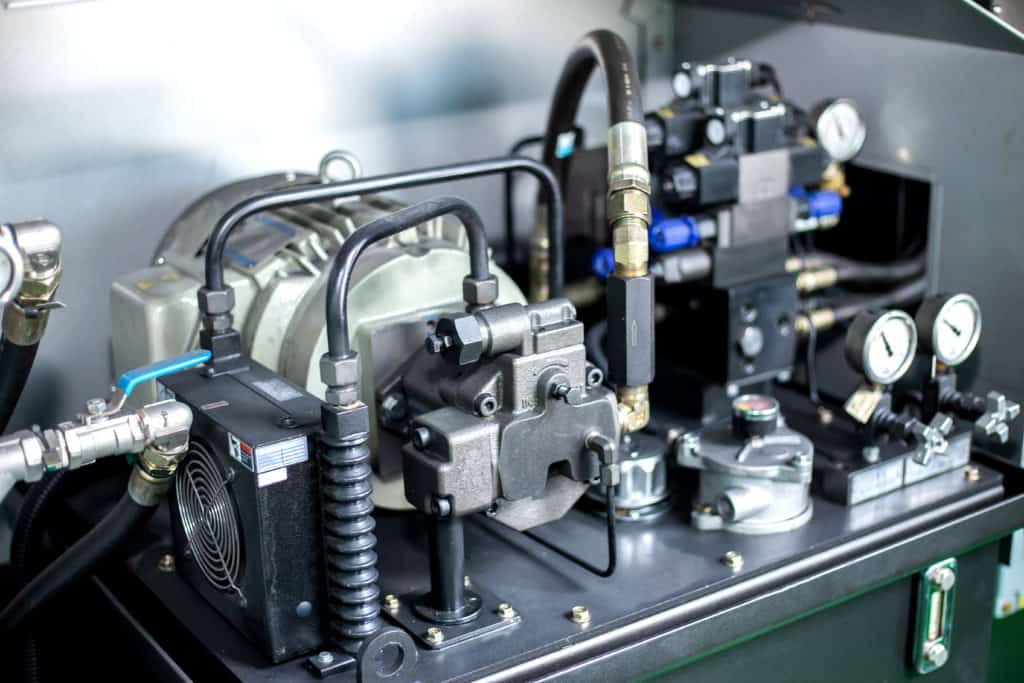
Hydraulic components must be designed and manufactured to perform reliably under pressure, repeated movement, vibration, temperature changes, and varying environmental conditions. The quality of each component can influence the efficiency and reliability of the entire hydraulic system.
When selecting a hydraulic components manufacturer, it is useful to understand how products move from initial design through production and testing. A structured process helps ensure that components meet their dimensional, material, performance, and application requirements.
Hydraulic Component Design
The manufacturing process usually begins with defining the component’s technical requirements. Engineers consider how the part will be used, the loads it will experience, and how it will interact with other hydraulic equipment.
Important design factors can include operating pressure, flow requirements, dimensions, connection types, materials, temperature range, and expected service life.
For custom components, engineers may also review existing drawings, physical samples, machine specifications, or installation limitations.
Computer-Aided Design
Computer-aided design tools allow engineers to create detailed component models and technical drawings before production begins.
CAD models can define dimensions, tolerances, mounting points, threads, internal passages, and other critical features. Digital design also makes it easier to identify potential interference or assembly problems at an early stage.
For complex components, engineering simulation may be used to evaluate stress, fluid flow, or other performance characteristics before physical prototypes are produced.
Material Selection
Material selection is an important part of hydraulic component design. Different applications may require different combinations of strength, hardness, corrosion resistance, weight, and wear resistance.
Common materials include carbon steel, alloy steel, stainless steel, aluminum, cast iron, copper alloys, and engineering plastics.
The selected material should also be compatible with the hydraulic fluid and expected operating temperature. Surface treatments or coatings may be added when additional corrosion or wear protection is required.
Prototype Development
For new or customized components, a prototype can provide an important link between design and full production.
A prototype allows engineers to evaluate physical dimensions, assembly, movement, sealing, and other characteristics before manufacturing larger quantities.
Testing a prototype can reveal design issues that may not be obvious from drawings or computer models. Necessary adjustments can then be made before production specifications are finalized.
Production Planning
Once a design has been approved, manufacturing requirements are translated into production processes. Engineers and production teams determine the appropriate machinery, tooling, materials, machining methods, and inspection points.
Production planning should account for both product quality and manufacturing efficiency.
For repeat orders, standardized processes can help maintain consistency between production batches.
Precision Machining
Many hydraulic components require precise machining to achieve the necessary dimensions and surface characteristics.
Processes such as turning, milling, drilling, boring, grinding, and other machining operations may be used depending on the component’s design.
Critical dimensions must be controlled within specified tolerances. Even small variations in certain areas can affect sealing, alignment, flow, or assembly.
Heat Treatment and Surface Processing
Some components require heat treatment to achieve suitable hardness, strength, toughness, or wear resistance.
Surface processing can also improve component performance. Depending on the application, manufacturers may use grinding, polishing, plating, coating, or other treatments.
For example, a hydraulic cylinder rod may require a smooth and durable surface to work correctly with seals and resist corrosion.
Component Assembly
Individual machined parts may need to be assembled into a complete hydraulic component. This can involve installing seals, pistons, valves, fittings, fasteners, and other elements.
Assembly procedures should be controlled carefully to prevent incorrect installation or contamination.
For components with multiple internal parts, standardized assembly instructions and inspection points can help maintain consistent results.
In-Process Inspection
Quality control should take place throughout production rather than only after the finished product is assembled.
In-process inspections can verify critical dimensions and identify problems before additional manufacturing steps are completed.
Depending on the component, inspection may involve dimensional measurements, surface checks, material verification, or process-specific testing.
Early detection of defects can reduce waste and prevent unsuitable products from progressing through the production process.
Pressure and Leakage Testing
Pressure testing is particularly important for hydraulic components that contain or control pressurized fluid. The test conditions should be established according to the component’s design and intended application.
Leakage testing can identify problems with seals, joints, ports, or other fluid-containing areas.
These tests provide information about component integrity that cannot always be confirmed through visual or dimensional inspection alone.
Functional Testing
Some components require functional testing to confirm that they operate correctly under simulated or actual working conditions.
For example, a valve may be evaluated for flow control and switching behavior, while a cylinder may be tested for smooth movement, pressure retention, and leakage.
Functional testing can help verify that individual components perform their intended role before they are installed in larger equipment.
Final Quality Inspection
After production and testing are complete, finished components can undergo final inspection.
Typical checks may include:
- Dimensions and tolerances
- Surface condition
- Product identification
- Assembly accuracy
- Pressure performance
- Leakage performance
- Functional operation
- Packaging condition
The exact inspection process depends on the product type and customer requirements.
Documentation and Traceability
Manufacturing records can provide useful information about how a component was produced and inspected. Records may include material information, production batches, inspection results, testing data, and corrective actions.
Traceability can be particularly valuable when components are used in critical industrial equipment.
If a quality issue is identified later, production records can help manufacturers investigate the problem and determine whether other components may be affected.
Quality Control Throughout the Process
Design, production, and testing should work together as one quality process. A well-designed component can still perform poorly if manufacturing tolerances are not controlled, while precise manufacturing cannot compensate for an unsuitable design.
For this reason, manufacturers should establish quality requirements at the design stage and carry them through material selection, machining, assembly, inspection, and final testing.
Continuous review of production data can also help identify opportunities for process improvement.
Custom and Standard Production
Standard hydraulic components typically follow established dimensions and specifications, making them suitable for common applications.
Custom components may require additional engineering, prototype development, tooling, and application-specific testing. This can increase development time but may be necessary when standard products cannot satisfy installation or performance requirements.
In either case, clear technical specifications are essential for maintaining consistent production.
What Buyers Should Evaluate
Businesses purchasing hydraulic components can ask manufacturers about their design and production processes before placing an order.
Useful areas to investigate include:
- Engineering and CAD capabilities
- Material control procedures
- Precision machining equipment
- Surface treatment processes
- Assembly methods
- Inspection equipment
- Pressure and leakage testing
- Quality documentation
- Prototype and customization capabilities
The answers can help buyers determine whether a supplier’s manufacturing processes are appropriate for the intended application.
Conclusion
The production of hydraulic components involves much more than machining individual parts. Successful manufacturing requires coordinated design, material selection, precision production, assembly, inspection, and performance testing.
By understanding these processes, industrial buyers can better evaluate suppliers and identify manufacturers capable of producing components that meet specific technical requirements. A structured approach from initial design through final testing helps support consistent quality, reliable operation, and longer component service life.


