


Linear motion systems are essential in modern engineering, powering everything from industrial automation to medical devices and semiconductor manufacturing. Among the most widely used technologies are screw-based linear systems and electromagnetic direct-drive solutions. While both achieve linear motion, their operating principles and performance characteristics differ significantly.
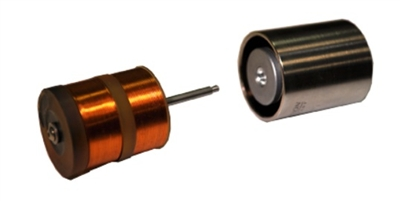
A voice coil linear actuator is a direct-drive device that produces linear motion through electromagnetic force, eliminating the need for mechanical conversion components. Unlike screw-based systems that rely on rotational motion converted into linear movement, it offers a more direct and responsive approach. A detailed overview of a voice coil actuator helps illustrate why this technology is increasingly chosen for high-speed and precision applications.
How the Two Systems Work
Screw-based linear systems use a motor that generates rotary motion. This motion is transferred through a lead screw or ball screw mechanism, converting rotation into linear displacement. While effective, this approach introduces mechanical contact, friction, and potential backlash.
In contrast, a voice coil system uses electromagnetic force generated by the interaction of a magnetic field and a current-carrying coil. This produces direct linear motion without intermediate mechanical conversion, resulting in smoother and faster response.
The difference in structure leads to two fundamentally different motion profiles: mechanical conversion versus direct electromagnetic actuation.
Speed and Dynamic Response
One of the most significant differences between the two systems is speed.
Voice coil linear actuators offer extremely fast acceleration and deceleration because they have low moving mass and no mechanical transmission delays. They respond almost instantly to input signals, making them ideal for high-frequency motion applications.
Screw-based systems, on the other hand, are limited by inertia from rotating components and mechanical friction. This reduces their ability to perform rapid directional changes, especially under load.
Precision and Positioning Accuracy
Precision is another key differentiator. Voice coil systems provide highly accurate positioning because they eliminate backlash and mechanical play. When combined with high-resolution feedback systems, they can achieve micron or sub-micron accuracy.
Screw-based linear actuators can also achieve good precision, particularly ball screw systems, but wear and mechanical clearance can introduce errors over time. Regular maintenance is often required to maintain accuracy.
Smoothness of Motion
Motion smoothness is critical in applications such as optics, imaging, and medical devices.
Voice coil systems provide exceptionally smooth motion due to their non-contact operation. There is no cogging or mechanical vibration from gear engagement.
Screw-based systems may exhibit vibration or uneven motion, especially at low speeds, due to friction and mechanical engagement between components.
Maintenance and Reliability
Maintenance requirements differ significantly between the two technologies.
Voice coil linear actuators require minimal maintenance because they have very few moving parts. There are no gears, belts, or screws that require lubrication or replacement.
Screw-based systems require periodic maintenance, including lubrication, alignment checks, and wear compensation. Over time, mechanical components may degrade, affecting performance and reliability.
Force Output and Stroke Length
Screw-based systems generally excel in high-force and long-stroke applications. They are widely used in industrial machinery where heavy loads must be moved over longer distances.
Voice coil actuators are better suited for short to medium stroke applications where speed and precision are more important than maximum force or travel range.
Energy Efficiency and Control
Voice coil systems provide highly linear force control, where output force is directly proportional to current. This makes them easier to control in precision applications.
Screw-based systems may have higher mechanical efficiency in some static load conditions, but friction losses and mechanical complexity can reduce overall responsiveness in dynamic operations.
Application Suitability
Each system is best suited to different types of applications:
Voice coil linear actuators are commonly used in:
- Semiconductor inspection systems
- Optical alignment and focusing systems
- Medical imaging and surgical devices
- High-speed test and measurement equipment
Screw-based linear systems are commonly used in:
- CNC machines
- Industrial automation equipment
- Heavy-duty positioning systems
- Material handling and packaging machinery
Conclusion
Both voice coil linear actuators and screw-based linear systems play important roles in modern motion control, but their strengths differ significantly. Screw-based systems are ideal for high-force and long-travel applications, while voice coil technology excels in speed, precision, and smoothness.
As industries continue to demand higher performance and tighter tolerances, the advantages of direct-drive systems like the voice coil linear actuator make them increasingly valuable in advanced engineering applications where accuracy and responsiveness are critical.


